

 English
 русский
 Français
 Español
 عربى
Technical Parameters for Lithium Battery Dry Rooms
The right dew point depends on the battery chemistry and process step. Your process engineers and the dry room specialist set the final specification. The table below shows common references for the envelope and its use.
| Item | Typical reference | Our typical solution |
|---|---|---|
| Dew point | About −40 °C to −60 °C for most cell assembly; lower for some advanced cells | Vapor-tight panels and sealed joints |
| Relative humidity | Often below 1 % RH at room temperature at these dew points | Airtight envelope |
| Cleanliness | ISO 7 or ISO 8 is common; tighter for sensitive steps | HEPA Supply Boxes, flush surfaces |
| Pressure | Positive to surrounding areas, often about 10–20 Pa | Airtight doors, airlocks |
| Temperature | About 20–25 °C, stable | Insulated panels |
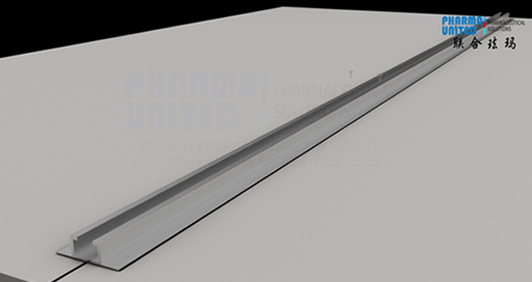
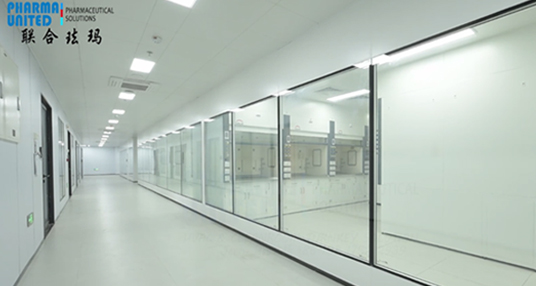
| Wall and ceiling | Smooth, vapor-tight, low particle shedding | Metal-faced panels, aluminum profiles, sealed edges |
| Personnel entry | Airlock with Air Shower, limited occupancy | Air Shower, interlocked doors |
| Material entry | Dry transfer, minimal door opening time | Pass Box, material airlock |
Design points that matter most:
- Airtightness: every leak lets humid air in, and the dehumidifier must remove that moisture, which raises energy cost.
- Vapor barrier: closed joints, sealed penetrations and vapor-tight cores help prevent moisture from passing through walls.
- People: staff release moisture, so occupancy, gowning and door discipline are part of the design.
- Materials: hygroscopic materials such as exposed rockwool should be avoided in the dry zone.
- Fire safety: battery plants need fire-rated envelopes and doors in line with local rules.
Please also tell us the planned occupancy, door opening frequency and material flow, since these affect moisture load and decide how many airlocks the room needs.
Cross-Border Delivery and Localized Construction Support
Battery factories are built fast, often in large expansion programs, and the dry room is on the critical path because production lines cannot start until it is dry. We plan shipments around your line installation and the time the dehumidification plant needs to bring the room to dew point.
- Specification review: we confirm dew point, class, room size, door positions and equipment sizes.
- Drawings: layout, elevations, ceiling plans and penetration plans are agreed before production.
- Production and numbering: panels, doors and profiles are produced and labeled by position.
- Packing and shipping: flat-pack loading in 20GP or 40HQ containers, with documents and FOB, CFR or CIF terms.
- Installation support: manuals, video guidance or a supervising engineer.
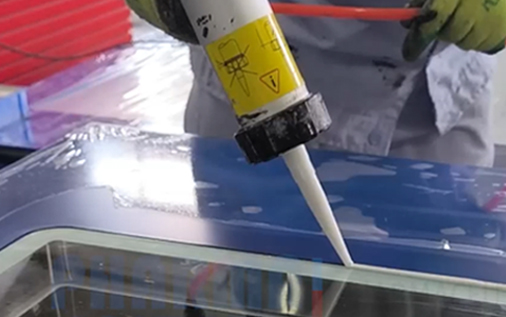
Local construction: sealing quality decides whether the room reaches its dew point. The most important points are joints, corners, ceiling-to-wall junctions, door frames and all penetrations for pipes, ducts and cables. These must be sealed with suitable materials, and the work should be checked before the room is closed in. We provide sealing details and can send an engineer to supervise.
After installation, an airtightness test, such as a pressure decay test, and a dew point verification are normally performed by the dry room specialist or a qualified tester. Local fire, electrical and safety rules apply, and your engineer remains responsible for approvals.
We suggest a short joint meeting between your project manager, the dry room specialist, the contractor and our engineer before production starts. Checking penetrations, door positions and sealing methods on one set of drawings usually prevents the leaks that later cause expensive rework and delays in reaching the target dew point.
Quality Control and Certification
Dry room performance is proven by measurement: dew point, leakage and particle counts. Wall panels and doors are not "dry room certified" on their own, and we do not claim this. We supply consistent products and honest information that make the commissioning easier.
| Control step | Inspection | Why it matters |
|---|---|---|
| Incoming materials | Sheet, face, core, profiles, gaskets, glass | Known quality |
| Panel production | Dimensions, flatness, bonding, edge sealing | Tight joints, low leakage |
| Edge and joint check | Sealing of panel edges and cut-outs | Reduced moisture paths |
| Door and window | Gasket compression, closing force, frame squareness | Airtightness |
| Equipment check | Air Shower and Pass Box function test | Ready for installation |
| Packing | Count, labels, condition | Complete delivery |
Documents available: material specifications, factory inspection records, filter data and, where available, reports on fire performance.
If you have a leakage target, such as a maximum air leakage rate at a stated pressure, please give it to us at the start. We will review whether the proposed panels and doors can support it, and we recommend on-site testing for proof. Factory audits and sample approval are welcome.
Battery customers often undergo audits from their own clients, including automotive companies with strict supplier rules. We answer questionnaires openly, supply sample panels, joints and gaskets for your own tests, and welcome factory visits or live video tours. Batch records are kept for each project, so questions about a room can be traced to its production date and material source.
If your project needs a specific test report, please tell us early. We will confirm what exists and say plainly if it does not, so you can plan any extra test by a recognized laboratory.
After-Sales Service and Response Capability
In a dry room, a small leak can raise the dew point and trigger energy waste or a production stop. Our after-sales service focuses on finding leaks quickly and supplying matching parts, using project records for each room.
- Fast communication: technical questions answered in English by email, phone or messaging.
- Remote diagnosis: photos and videos of joints, gaskets, windows and door frames help us assess problems.
- Spare parts: gaskets, hinges, closers, handles, windows, sealant and HEPA Filters.
- Modification support: new openings, doors or airlocks can be added with resealing details.
- Engineer visits: by arrangement.
Typical causes of rising dew point:
| Symptom | Possible cause | Suggested action |
|---|---|---|
| Dew point rises slowly | Leakage at joints or penetrations | Inspect and reseal, repeat leak test |
| Dew point spikes after shifts | Door opening, high occupancy | Review airlock discipline, door timing |
| Pressure drops | Gasket wear or open penetration | Replace gasket, reseal opening |
A simple inspection routine, with photos of door gaskets and sealed joints, helps detect problems early. Keeping spare gaskets and sealant at the plant allows quick repair.
Dry room operators usually log dew point, temperature, pressure and energy use. When values drift, we encourage you to send us the trend together with any recent changes, such as new openings, new equipment or a change in staffing. With the stored drawings and project records, our engineers can suggest likely leak locations and the best way to repair them.
Replacement parts are made to the original specification, so the sealing performance matches the rest of the room. For urgent cases, we discuss the fastest shipping option and prepare documents in advance.
A small stock of gaskets, sealant and door hardware at the plant helps you act the same day.
Commercial Terms, Warranty and Lifecycle Cost
The largest running cost of a dry room is energy for dehumidification, and leakage directly increases it. A tighter envelope often pays back its extra cost quickly, because the dehumidifier handles less moisture and runs at lower load.
| Item | Our approach |
|---|---|
| Quotation | Itemized by room and component, with drawings |
| Trade terms | FOB, CFR or CIF, defined in the quotation |
| Payment | Commonly a deposit with balance before shipment or against documents; final terms in the contract |
| Warranty | Defined by component group in the contract |
| Lead time | Given after drawing confirmation |
| Customization | Size, thickness, door layout, window options |
Where lifecycle cost is decided:
- Leakage rate: the main driver of energy use.
- Dew point target: each step lower costs much more in equipment and energy.
- Occupancy: fewer people and better airlocks reduce moisture load.
- Modularity: new lines can be added as production grows.
Dehumidification plants, nitrogen systems, glove boxes, HVAC, fire protection and permits are outside our supply. Warranty exclusions are stated clearly in the contract.
When comparing quotations, ask each supplier to state panel core, face material, thickness, joint design, door type, gasket type and packing. Differences here explain most price gaps and have a direct effect on leakage and energy use.
We provide itemized quotations and can show alternatives, for example a higher-grade envelope for the driest areas and a standard one for corridors and support rooms. For large factories, a phased price allows each hall to be ordered when its equipment is confirmed.
Real Factory Strength for Battery Projects
Battery manufacturers expand quickly and need suppliers who can deliver on time. Pharma United Co., Ltd., founded in 2006, runs two factories in Kunshan and Qianjiang covering 20,000 m², with more than 60 staff. We are a manufacturer, not a trading company.
| Indicator | Information |
|---|---|
| Experience | 20+ years in cleanroom engineering |
| HPL cleanroom panels | About 250,000 m² per year; China's largest HPL cleanroom panel manufacturer |
| Container shipments | More than 1,000 forty-foot high-cube containers per year |
| Location | Kunshan, about 30 km from Shanghai |
| Product range | Panels, doors and windows, equipment, modular PODs, HEPA products |
| Service | Design, manufacture and installation support |
Why this helps battery buyers: large panel output supports big halls with uniform finish and tight tolerances, and our export experience helps keep container loading and documents accurate. Because panels, doors, windows, Air Showers and Pass Boxes come from one source, interfaces match and sealing is simpler.
Samples, references, factory visits and video tours are available on request. Our engineers answer technical questions directly, so decisions are not delayed.
Our designers prepare layouts and drawings, our engineers review sealing and interface details, and our production teams run dedicated lines for panels, doors and equipment. Export coordinators prepare packing and documents for shipments to many countries.
Customers in electronics and related industries return for new halls and spare parts, and we can share photos and videos of completed rooms on request. Visitors are welcome at our factory by arrangement.
Our staff reply promptly and in plain language, and our designers can adapt standard layouts to your building.
Lithium Battery Dry Room FAQ
Q1. What dew point does a battery dry room need?
Many cell assembly processes use about −40 °C to −60 °C dew point, and some advanced cells need lower. Your battery chemistry and process decide.
Q2. Why is airtightness so important?
Every leak brings moisture into the room, which the dehumidifier must remove. This raises energy cost and can prevent the room from reaching its dew point.
Q3. Do you supply the dehumidification system?
No. Dehumidification plants and nitrogen systems come from specialists. We supply the envelope, doors, windows and room equipment and coordinate interfaces.
Q4. Which panel core is suitable?
Closed-cell cores with sealed metal faces are preferred. Exposed hygroscopic materials such as rockwool should be avoided in the dry zone. We advise based on your fire requirements.
Q5. Does the dry room also need to be a cleanroom?
Often yes. Many plants specify ISO 7 or ISO 8 inside the dry room, because metal particles can damage cells.
Q6. Can you supply pilot dry rooms?
Yes, modular PODs can serve as small dry rooms for R&D and sample production.
Q7. How do I get a quotation?
Send your dew point, class, floor plan, door and equipment sizes and destination country.
Q8. Can I extend the dry room later?
Yes. Modular panels allow extensions, although the dehumidification capacity must be checked by the specialist.
Q9. Do you offer samples?
Yes, samples can be sent for your own tests.
Q10. Can you help with layout?
Yes, we prepare layout proposals that your dry room specialist can adjust.