

 English
 русский
 Français
 Español
 عربى
Technical Parameters for Containment Rooms
The table lists common design features, not a complete design. BSL-3 and higher laboratories must be designed by qualified biosafety specialists in line with the national code and a risk assessment by the responsible institution. Pressure and airflow values vary by code.
| Feature | BSL-2 laboratory | BSL-3 laboratory |
|---|---|---|
| Access | Self-closing, lockable doors | Controlled access, interlocked doors through an anteroom |
| Airflow | Inward airflow preferred; exhaust may be non-recirculated | Directional inward airflow, negative pressure, no recirculation of exhaust to other areas |
| Exhaust filtration | Not always required; depends on risk | HEPA filtered exhaust is commonly required |
| Surfaces | Smooth, impervious, easy to clean | Smooth, impervious, sealed joints and penetrations |
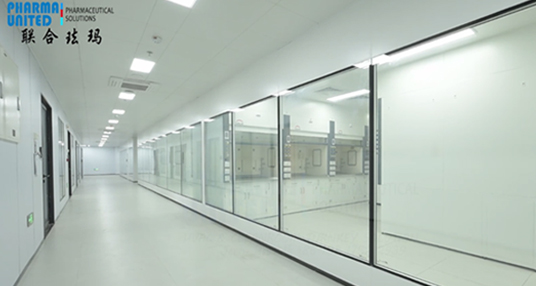
| Windows | Closed, may be fixed | Sealed windows |
| Pressure steps | Local code | Stepped negative pressure, often around 10–15 Pa per step; final values per code |
| Primary containment | Class II biological safety cabinet where aerosols may form | Class II or III cabinet for infectious work |
| Decontamination | Autoclave available in the building | Autoclave in or near the lab, often pass-through |
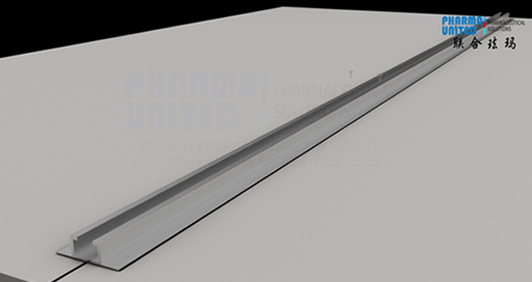
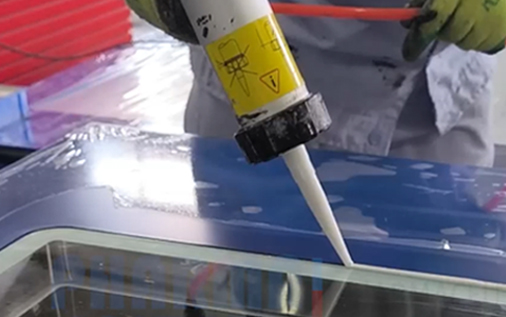
Airtightness: sealed envelopes make it possible to hold negative pressure and, if required by the code, to carry out a pressure decay test and room decontamination. Penetrations for pipes and cables must be sealed with approved methods.
We supply flush panels, aluminum profiles, doors with gaskets, windows, Pass Boxes and HEPA components made to your drawings.
Surfaces and sealants should be chosen for the decontaminants used in the laboratory, such as chlorine compounds, peracetic acid or gaseous agents. Tell us your protocol early, and we will check material compatibility, so floors, walls and gaskets are not damaged by repeated decontamination.
Cross-Border Delivery and Localized Construction Support
Containment laboratories are often funded by government or institutional programs with fixed deadlines and strict procurement rules. We therefore prepare complete, well-documented shipments that suit tender and handover requirements.
- Drawing confirmation: room layout, door schedule, airlock positions and penetration plans are agreed before production.
- Numbered packing: panels and doors are labeled by room and position.
- Export documents: packing list, commercial invoice, certificate of origin, with FOB, CFR or CIF terms.
- Staged shipments: deliveries can be split to match the building schedule.
Localized construction: a containment lab requires experienced contractors who understand sealing, pressure testing and decontamination. In many countries, local approval of the design and a licensed contractor are mandatory. We provide drawings, an installation manual, video guidance and, if needed, a supervising engineer. Good sealing of joints, penetrations and door frames decides whether the room holds negative pressure, so these steps deserve special attention and inspection.
Specialist items such as inflatable-seal doors, bio-seal dampers, effluent treatment and pass-through autoclaves are normally sourced from specialist suppliers and coordinated by your project team. After installation, an independent party verifies airflow, pressures, filter integrity and any required leak tests before the laboratory is commissioned.
We also suggest an early meeting between your biosafety officer, the HVAC designer, the contractor and our engineer. Walking through airlock sequences, door interlock logic and penetration locations on the drawings usually reveals conflicts early, and it saves time and money compared with changes during construction.
Delivery dates are agreed against your building schedule, and we can ship in stages so that early rooms are installed while later items are still in production.
Quality Control and Certification
Biosafety laboratories are verified through commissioning, testing and approval by the responsible authority. No wall panel or door is "BSL-3 certified" on its own, and we do not claim otherwise. Our role is to supply well-made, consistent components, together with records that your commissioning team can use.
| Control step | Inspection | Value for containment |
|---|---|---|
| Raw materials | Sheet metal, HPL, core, profiles, gaskets, glass | Known quality |
| Panel production | Dimensions, flatness, bonding, edge sealing | Tight joints, fewer leaks |
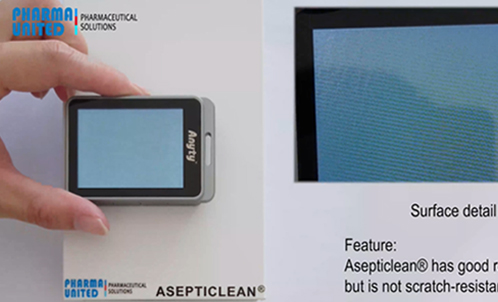
| Surface check | Scratches, bubbles, cleanability | Easy decontamination |
| Door and window | Gasket contact, hinge and interlock operation | Reliable closure |
| HEPA components | Factory efficiency records | Traceable filtration |
| Packing | Piece count, labels, condition | Complete delivery |
Documents available: material specifications, inspection records, filter data and, where available, reports on fire or surface performance. These may be included in your commissioning file.
On-site testing normally includes pressure checks, HEPA filter leak testing, airflow verification, interlock checks and, depending on the code, an airtightness test. Certification of biological safety cabinets is carried out by qualified specialists. Please state any special documentation needs at the quotation stage so we can confirm what we can provide.
For publicly funded laboratories, procurement rules may require supplier declarations, technical data sheets and sometimes factory inspection. We can prepare these documents and receive inspectors at our factory. Our team will tell you clearly what documents exist, and we do not provide statements that cannot be supported, because commissioning teams rely on accurate information.
Sample panels, doors and gaskets can be sent in advance, so your safety team can test them with your own decontamination agents.
After-Sales Service and Response Capability
For containment laboratories, a small defect in a seal or a door can interrupt research or diagnostic work and trigger a formal review. Our aim is to help you identify the issue quickly and restore the original performance using matching parts.
- Documented supply: drawings and bills of materials are kept for each project.
- Remote support: photos and videos of gaskets, frames, windows and joints help us propose a fix.
- Spare parts: gaskets, hinges, closers, handles, windows, lights and HEPA Filters.
- Modifications: additional rooms, doors or pass boxes can be added with advance planning.
- Engineer visits: by arrangement for repair, adjustment or expansion.
Common issues and responses:
| Observation | Possible cause | Suggested action |
|---|---|---|
| Negative pressure drops | Door gasket wear, unsealed penetration, loaded filter | Replace gasket, reseal, inspect filter |
| Door does not close fully | Hinge settling, frame movement | Adjust hinge, check frame |
| Surface damage | Impact or chemical attack | Repair or replace panel, review cleaning agent |
Any repair should follow your biosafety procedures, including decontamination before work begins. Our engineers can join a video call with your safety officer to plan the repair.
Preventive checks are especially valuable in containment rooms. We suggest regular inspection of door gaskets, sealed penetrations, window seals and filter housings, together with recording of pressure readings. Early signs, such as a slow drift in the pressure display, can then be investigated before they cause a failure during an audit or an important experiment.
We are happy to review your inspection checklist and add useful points.
Commercial Terms, Warranty and Lifecycle Cost
A containment laboratory carries high construction, equipment and operating costs. The building envelope is only one part of the budget, but a poor envelope can raise the cost of everything else, because leakage forces the ventilation system to work harder and complicates verification.
| Item | Our approach |
|---|---|
| Quotation | Itemized by room and component, with layout drawing |
| Scope boundary | Clear list of what we supply and what specialist suppliers provide |
| Trade terms | FOB, CFR or CIF, defined in the quotation |
| Payment | Commonly deposit with balance before shipment or against documents; final terms in the contract |
| Warranty | Defined by component group in the contract |
| Customization | Size, color, door layout, window options on request |
Items often missing from early budgets:
- Specialist airtight doors, dampers and effluent treatment
- Biological safety cabinets and their annual certification
- Commissioning, validation and training
- Filter replacement and decontamination cost
- Local permits and authority review
We recommend clarifying scope boundaries at the start. Our contract states warranty exclusions, such as damage from unsuitable decontaminants or unauthorized changes, so both sides understand responsibilities.
Because costs for containment laboratories differ so much between countries and codes, we avoid quoting generic square-meter prices. Instead, we prepare a transparent list for our scope and suggest that you collect similar lists from specialist suppliers. Putting them together gives a realistic project budget and avoids unpleasant surprises when the specialist items are added.
We are also glad to help you compare different panel and door options, and to explain how each affects price, durability and ease of decontamination.
Clear scope and honest numbers help your project start on solid ground.
Real Factory Strength for Containment Projects
Containment projects demand reliable suppliers, because rework in a sealed laboratory is expensive and slow. Pharma United Co., Ltd. has made cleanroom systems since 2006 and operates two factories in Kunshan and Qianjiang, covering 20,000 m², with more than 60 staff. We manufacture the core components ourselves.
| Indicator | Information |
|---|---|
| Experience | 20+ years in cleanroom engineering |
| HPL cleanroom panels | About 250,000 m² per year; China's largest HPL cleanroom panel manufacturer |
| Container shipments | More than 1,000 forty-foot high-cube containers per year |
| Location | Kunshan, about 30 km from Shanghai |
| Product range | Panels, doors and windows, equipment, PODs, HEPA products |
| Service | Design, manufacture, installation support |
Benefits for laboratory buyers: consistent panel production helps joints stay tight, and one-source supply of panels, doors, windows and Pass Boxes means interfaces are designed together. Our experience in pharmaceutical and laboratory cleanrooms provides a good foundation, while we openly coordinate with specialist suppliers for high-containment items.
Factory visits, sample requests, project references and video tours are available.
Our team includes designers who prepare detailed layouts, engineers who review sealing and interface details, production supervisors and export coordinators who manage packing and documents. This coordination is useful for laboratory projects, where many parties must work to the same drawings. We can also share photos and videos of completed rooms on request.
We are open about our scope, and we say clearly where specialist partners are needed.
Customers can ask for sample panels, door samples and project photos before ordering, and our factory is open for audits and visits by arrangement.
We reply to technical questions promptly.
BSL-2/BSL-3 Containment Room FAQ
Q1. Can you build a complete BSL-3 laboratory?
We supply the envelope, doors, windows, Pass Boxes and HEPA components, and can coordinate with specialist suppliers and designers. BSL-3 design must follow your local code and be reviewed by qualified biosafety experts.
Q2. Are your panels BSL-3 certified?
No product is certified that way. Laboratories are verified through commissioning and approval. Our panels give smooth, sealed, decontaminable surfaces that support the design.
Q3. What is the main difference between BSL-2 and BSL-3?
BSL-3 adds controlled access through airlocks, directional negative pressure, HEPA filtered exhaust and stricter sealing and decontamination requirements.
Q4. Can a modular POD serve as a BSL-2 lab?
Yes, many diagnostic and PCR laboratories use modular rooms, provided the design meets local requirements for ventilation, sinks, access and waste handling.
Q5. How is airtightness checked?
Common methods include pressure decay testing and smoke or leak checks, depending on the code and risk assessment.
Q6. Can you help with documents for authority review?
We provide drawings, material data and inspection records. Approvals remain the responsibility of the owner and the designer.
Q7. How do I start a project?
Send your biosafety level, layout, local code and destination country, and we will prepare a proposal.
Q8. Does a BSL-2 laboratory need HEPA filtered exhaust?
Not always. It depends on your risk assessment and the local code, although HEPA filtration is commonly considered when aerosols may be produced.
Q9. Can you supply sample panels for decontamination tests?
Yes, we can send samples for your team to test with your own agents.