

 English
 русский
 Français
 Español
 عربى
Technical Parameters for Aseptic Filling Rooms
EU GMP Annex 1 and FDA guidance on aseptic processing set the main expectations, and many national codes follow them. Your contamination control strategy, the type of barrier and the regulator decide the final design. The table gives common references.
| Item | Typical reference | Our typical solution |
|---|---|---|
| Filling zone | Grade A (ISO 5), unidirectional airflow at about 0.36–0.54 m/s guidance value at working height | Laminar Air Flow, HEPA Supply Boxes |
| Background room | Grade B (ISO 5 at rest, ISO 7 in operation) | Flush panels, HEPA ceiling, low-level returns |
| Pressure | Positive to adjacent lower grade rooms by about 10–15 Pa | Airtight envelope, interlocks |
| Air changes | Higher than lower grades, often well above 40 per hour in Grade B, set by the HVAC designer | Dense HEPA coverage |
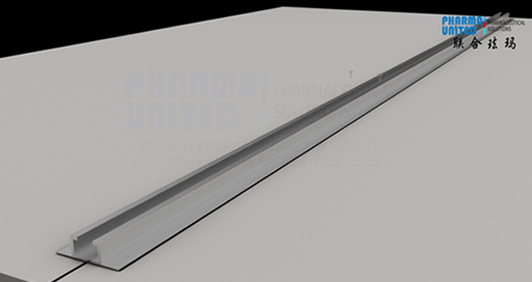
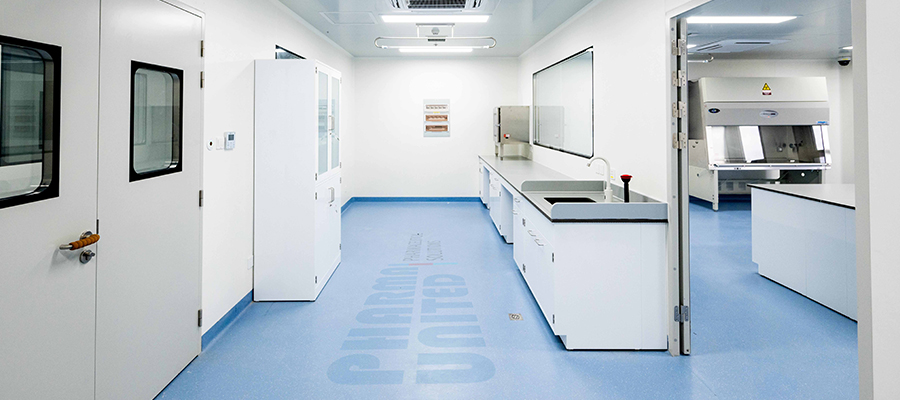
| Surfaces | Smooth, impervious, no ledges, cleanable and sporicidal-resistant | Stainless or HPL faces, coved profiles |
| Drains and sinks | None in Grade A and B rooms | Plan outside the room |
| Temperature / humidity | Often cooler, such as 18–22 °C, for gowned operators | Insulated, airtight envelope |
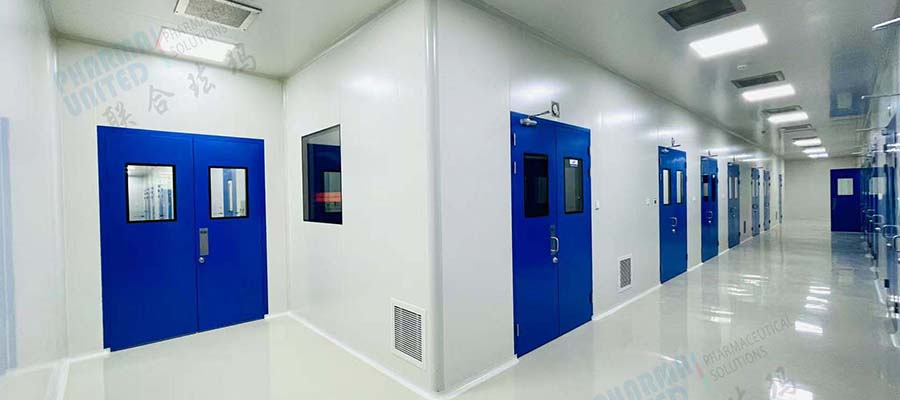
| Entry | Gowning stages and interlocked airlocks | Air Shower, interlocked doors |
Design points:
- Barrier first: current guidance favors RABS or isolators to separate people from the open product, which lowers the room's contamination load.
- Airflow patterns: smoke studies show that air flows as designed around the line, and any disturbance by doors or people is understood.
- Equipment entry: sterilized components enter through autoclaves, tunnels or hatches that are designed with the line supplier.
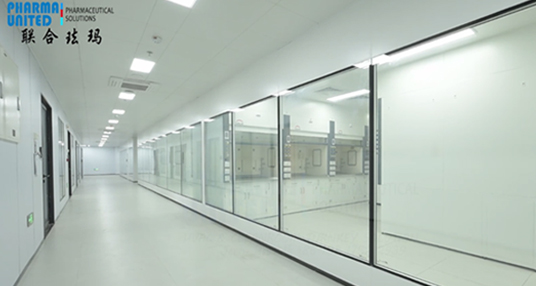
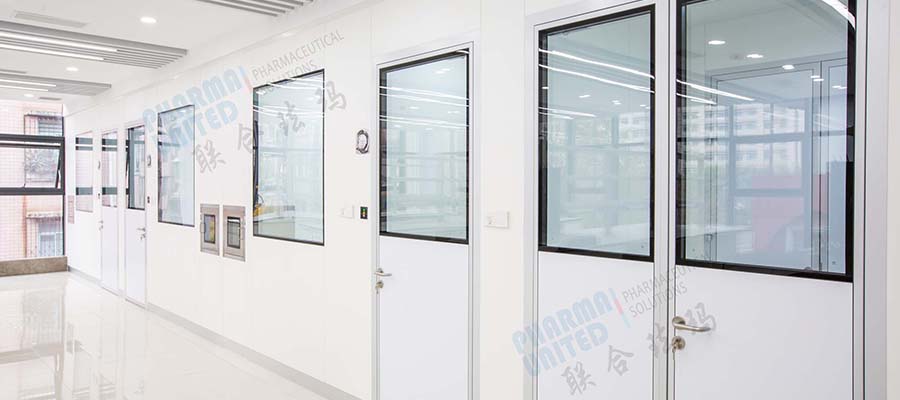
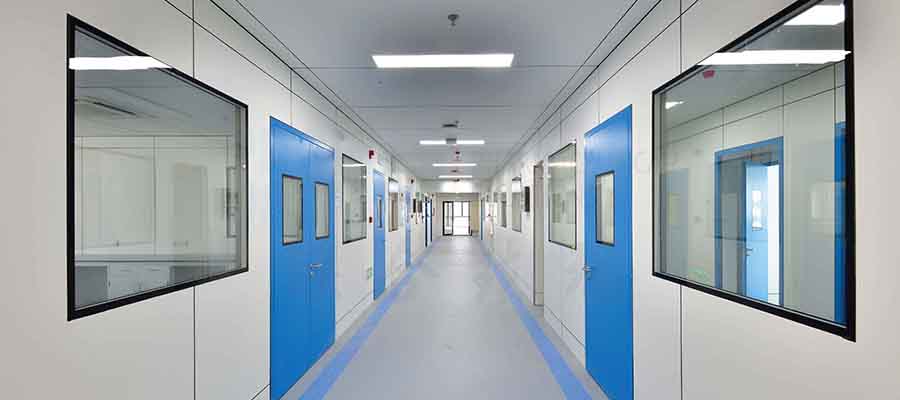
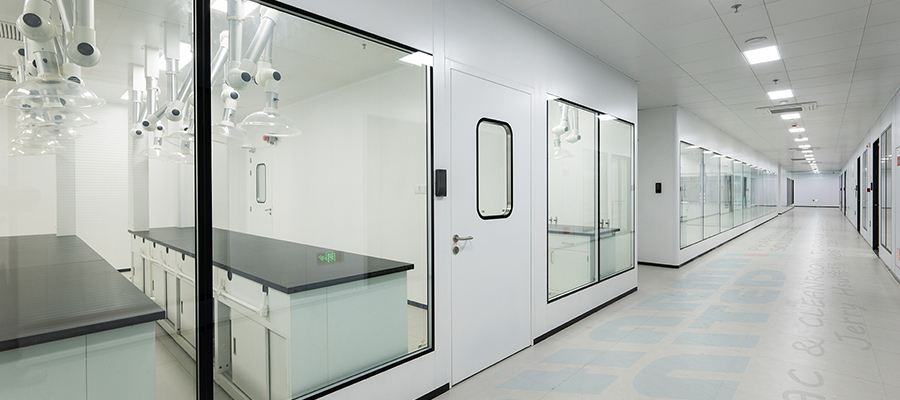
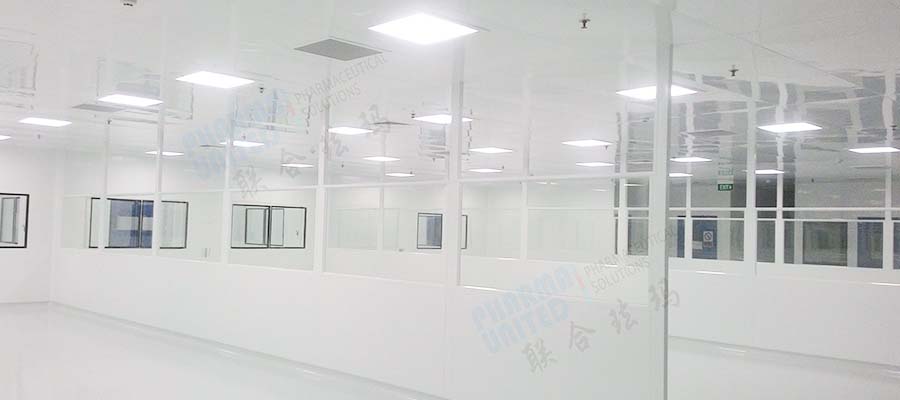
- Observation: windows let supervisors watch the process without entering.
- Low-level returns: wall return air grilles carry particles away from the working zone.
Cross-Border Delivery and Localized Construction Support
Aseptic filling rooms are built around a very expensive filling line, so schedules are driven by line delivery, factory acceptance and site acceptance dates. We plan shipments of the room components so that the Grade B envelope is ready when the line arrives.
- Line interface review: we study the equipment sizes, door and wall openings, service routes and loading path.
- Drawings: room layout, ceiling plan, airlocks and windows are agreed before production.
- Production and numbering: panels, doors, grids and profiles are produced and labeled.
- Packing and shipping: flat-pack loading with protection, and documents with FOB, CFR or CIF terms.
- Installation support: manuals, video guidance or a supervising engineer.
Local construction: a filling line is usually installed before the last walls close, through a temporary opening or removable panels. Equipment entry plans, utility penetrations and final sealing should be agreed with the line supplier and the HVAC contractor early, so the Grade B envelope can be completed and cleaned before the line is connected.
After construction, the validation team normally tests HEPA integrity, airflow, pressure cascades, recovery and particle counts, and performs airflow visualization. Local rules apply, and your engineer remains responsible for approvals.
We suggest a short planning call between your validation lead, the filling line supplier, the HVAC contractor and our engineer. Agreeing wall openings, equipment entry routes, utility penetrations and window positions on one drawing prevents most site changes. Staged shipments can also be arranged when the building is handed over in phases.
Our staff reply promptly and in plain language, and our designers can adapt standard layouts to your building and your process.
Quality Control and Certification
Aseptic filling is audited intensely, with attention to design, qualification, monitoring and media fills. No wall panel, door or window is approved for aseptic use on its own, and we do not make such claims. We provide consistent products and documents that support your qualification.
| Control step | Inspection | Why it matters |
|---|---|---|
| Incoming materials | Sheet, face, core, profiles, gaskets, glass | Known quality |
| Panel production | Dimensions, flatness, bonding, edge sealing | Tight, flush joints |
| Surface inspection | Scratches, bubbles, color, cleanability | Cleanable, low-particle surfaces |
| Door and interlock | Gasket contact, interlock function | Pressure stability |
| HEPA and LAF products | Factory efficiency records, function test | Traceable filtration |
| Packing | Count, labels, condition | Complete delivery |
Documents available: material specifications, factory inspection records, filter data and, where available, reports on fire or surface performance. These support your DQ and IQ files.
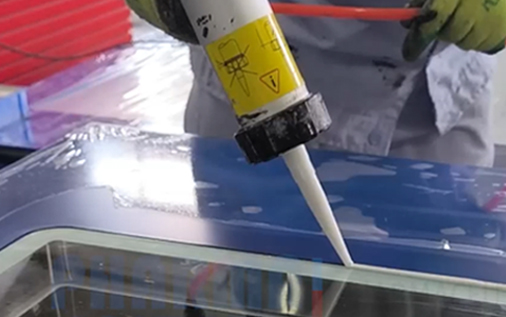
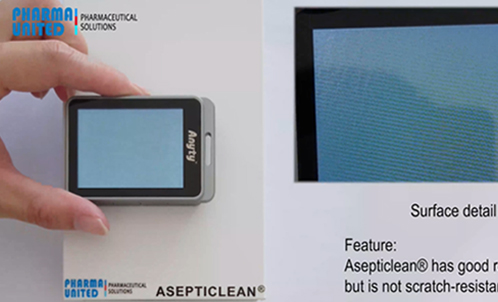
Surfaces in Grade B rooms face frequent sporicidal cleaning. Tell us your agents and rotation, and we will suggest compatible faces and sealants. Supplier audits, sample approvals and questionnaires from your quality unit are welcome.
Quality teams and auditors often ask how room surfaces and seals are made and checked. We explain our inspection steps, share typical records and welcome factory visits or live video tours, where you can watch panels, doors and windows being made and inspected. Batch records are kept for each project, so later questions about a specific room can be traced to production.
We recommend agreeing acceptance tests, such as pressure, airflow and leak checks, before handover.
Our staff reply promptly and in plain language, and our designers can adapt standard layouts to your building and your process.
After-Sales Service and Response Capability
A damaged seal or a failed filter in a filling room can stop production and trigger a deviation. Our after-sales service focuses on fast identification and exact replacement parts, backed by complete project records.
- Fast communication: technical questions answered in English by email, phone or messaging.
- Remote diagnosis: photos, videos and monitoring trends help us suggest causes.
- Spare parts: gaskets, hinges, interlock parts, windows, lights, HEPA Filters and panels.
- Modification support: new openings, airlocks or windows can be added with updated drawings for change control.
- Engineer visits: by arrangement.
Typical problems:
| Observation | Possible cause | Suggested action |
|---|---|---|
| Particle alarms in Grade B | Filter leak, door left open, surface damage | Leak-test filter, check doors, inspect surfaces |
| Pressure to Grade C falls | Gasket wear, open penetration | Replace gasket, reseal |
| Window fogging or leaks | Seal failure | Re-seal or replace window |
| Cleaning agent damage | Incompatible agent | Review agent, repair surface |
All repairs should follow your change control and cleaning procedures, and our engineers can join a video call to plan the work.
In a Grade B room, small defects matter, so we suggest a routine inspection of gaskets, sealed joints, window seals and filter housings, with photos kept in a log. When something looks different, send us the photo, the room name and the monitoring trend. Our engineers will compare them with the project drawings and suggest a cause and a repair method.
Replacement parts are made to the original specification, so sealing and appearance match the existing room. For urgent cases, we discuss the fastest shipping option and prepare documents in advance.
A small stock of gaskets, sealant and filters at the site helps you act the same day.
Commercial Terms, Warranty and Lifecycle Cost
The filling line costs far more than the room around it, but a poor room can make an expensive line unusable, through failed qualification, high monitoring counts or repeated repairs. A tight, durable Grade B envelope is a cost-effective way to protect that investment.
| Item | Our approach |
|---|---|
| Quotation | Itemized by room and component, with drawings |
| Trade terms | FOB, CFR or CIF, defined in the quotation |
| Payment | Commonly a deposit with balance before shipment or against documents; final terms in the contract |
| Warranty | Defined by component group in the contract |
| Lead time | Given after drawing confirmation |
| Customization | Size, thickness, faces, door layout, window options |
Where cost is decided:
- Barrier choice: RABS or isolators change the room requirements and the HVAC load.
- HEPA coverage: denser coverage raises cost and energy but improves recovery.
- Surface quality: stainless or HPL faces cost more than standard faces but resist sporicides.
- Airtightness: reduces fan energy, which is a large running cost in Grade B.
Filling lines, isolators, RABS, lyophilizers, HVAC, monitoring and qualification are outside our supply. Warranty exclusions are stated clearly in the contract.
When comparing quotations, ask each supplier to state the face material, panel thickness, HEPA coverage, door and window details, gasket type and packing, not only price. Small differences in these items decide how well the room performs for years.
We provide itemized quotations and can show alternatives, such as stainless faces in the Grade B room and economical faces in Grade D corridors.
We are glad to explain every line of the quotation.
Real Factory Strength for Aseptic Filling Projects
Sterile projects need suppliers who are stable and open about their capabilities. Pharma United Co., Ltd., founded in 2006, runs two factories in Kunshan and Qianjiang covering 20,000 m², with more than 60 staff. We are a manufacturer, not a trading company.
| Indicator | Information |
|---|---|
| Experience | 20+ years in cleanroom engineering |
| HPL cleanroom panels | About 250,000 m² per year; China's largest HPL cleanroom panel manufacturer |
| Container shipments | More than 1,000 forty-foot high-cube containers per year |
| Location | Kunshan, about 30 km from Shanghai |
| Product range | Panels, doors and windows, equipment, modular PODs, HEPA products |
| Service | Design, manufacture and installation support |
Why this helps filling room buyers: we make panels, doors, windows, Laminar Air Flow units, Pass Boxes and Air Showers ourselves, so interfaces match and the pressure cascade is easier to hold. Our scale supports consistent finish across a large project.
Samples, references, factory visits and video tours are available on request. Our engineers answer technical questions directly.
Our designers prepare layouts and detail drawings, our engineers review sealing and interface details with the line supplier, and our production teams run dedicated lines for panels, doors, Laminar Air Flow units and equipment. Export coordinators prepare packing and documents for shipments to many countries.
Customers in sterile pharmaceutical and biotech fields return for new rooms and spare parts, and we can share photos and videos of completed rooms on request. Visitors are welcome at our factory by arrangement.
Our staff reply promptly and in plain language, and our designers can adapt standard layouts to your building and your process.
Aseptic Filling Room Enclosure FAQ
Q1. What grade is needed for aseptic filling?
Open aseptic operations take place in Grade A with a Grade B background under EU GMP. FDA guidance uses ISO 5 for the critical area and ISO 7 for the supporting area.
Q2. Do I need an isolator or RABS?
Current guidance favors barrier systems, which reduce risk from operators. Your regulator and risk assessment decide, and we coordinate the room around your choice.
Q3. Do you supply the filling line?
No. Filling lines, isolators and lyophilizers come from specialists. We supply the room envelope, Laminar Air Flow units, airlocks and HEPA parts.
Q4. Why no sinks or drains in Grade A and B?
They can harbor microorganisms and are therefore avoided in the highest-risk rooms.
Q5. Are your panels approved for aseptic use?
No building product is approved alone. Our panels have smooth, sealed, cleanable surfaces and come with records for your qualification.
Q6. Can a small filling suite be built from modules?
Yes, modular PODs are used for clinical batches and small-scale filling, when the design meets the required grade.
Q7. How do I get a quotation?
Send your filling line layout, barrier type, grade map and destination country.
Q8. How is airflow checked around the line?
Airflow visualization, often called smoke studies, is performed by your validation team to show that air moves as designed.
Q9. Do you offer samples?
Yes, samples of panels, joints and gaskets can be sent for your own cleaning tests.
Our staff reply promptly and in plain language, and our designers can adapt standard layouts to your building and your process.