

 English
 русский
 Français
 Español
 عربى

Semiconductor Fab Construction Timeline & Cleanroom Commissioning Guide
Building a semiconductor fab is not just another construction project. It is a race against time, where every week of delay can mean millions in lost revenue. The cleanroom is the heart of the facility, and how you plan its construction and commissioning often determines whether you hit your first-wafer milestone. In this article, we walk through realistic timelines and the commissioning steps that experienced project teams rely on to keep a fab on track.
Why Semiconductor Fabs Demand a Different Approach
Semiconductor manufacturing requires ISO Class 1–5 cleanrooms with extreme control over particles, airborne molecular contamination (AMC), vibration, temperature, and humidity. Unlike a pharmaceutical cleanroom, a fab also houses enormous, sensitive tools such as lithography scanners that weigh tens of thousands of kilograms and demand nanometer-level stability. These requirements ripple through every phase of construction, from the concrete slab to the final filter. The commissioning process must therefore verify not only cleanliness but also the mechanical, electrical, and chemical systems that support the tools. That complexity is why fab projects typically take 18 to 36 months from groundbreaking to production, and why commissioning can easily consume the final three to six months.
The Big Picture: A Typical Fab Construction Timeline
No two fabs are identical, but most projects follow a similar sequence. The phases overlap heavily, and experienced teams use prefabrication and modular construction to compress the schedule. Here is a realistic breakdown for a new fab or a major cleanroom expansion.
Phase 1: Design and Permitting (6–12 months)
This phase defines tool layout, utility requirements, cleanroom classification, and structural loads. It also includes permitting, which can vary dramatically by region. Getting the design right early prevents costly changes later.
Phase 2: Civil, Structural, and Utility Construction (12–18 months)
The shell and core are built, including vibration-isolated slabs, subfab spaces, and primary utilities. This is also when major piping, electrical, and exhaust systems are roughed in.
Phase 3: Cleanroom Fit-Out (6–10 months)
Cleanroom panels, ceilings, floors, doors, and windows are installed. HVAC systems, ductwork, and HEPA/ULPA filters go in. Tool hook-up begins as areas are completed.
Phase 4: Commissioning and Qualification (3–6 months)
This is where the facility proves it meets design specifications. Testing includes filter integrity, airflow, pressure, particle counts, AMC, vibration, and temperature stability. Qualification documentation (IQ/OQ/PQ) is compiled for regulators and customers.
| Phase | Typical Duration | Main Focus |
|---|---|---|
| Design & Permitting | 6–12 months | Tool layout, utility specs, permits |
| Civil & Structural | 12–18 months | Shell, vibration isolation, primary utilities |
| Cleanroom Fit-Out | 6–10 months | Panels, HVAC, piping, tool hook-up |
| Commissioning | 3–6 months | Leak testing, airflow, particle counts |
| Qualification | 2–4 months | IQ/OQ/PQ, documentation, handover |
Notice that commissioning and qualification are not the same as construction completion. Many projects finish the physical build only to discover that balancing airflow or achieving AMC targets takes longer than expected. That is why smart teams involve commissioning experts from the design stage.
Cleanroom Commissioning: The Step That Makes or Breaks Your Schedule
Commissioning is the bridge between a constructed space and a qualified cleanroom. It is not simply switching on the HVAC and checking a particle counter. For semiconductor fabs, commissioning verifies that every system performs within tight tolerances, and it produces the evidence needed for qualification. If commissioning is rushed or poorly planned, the fab may sit idle while issues are corrected.
Mechanical Completion vs. Commissioning
Mechanical completion means all equipment is installed and can be started safely. Commissioning then tests and adjusts those systems to meet design intent. In a fab, this includes air handling units, exhaust systems, process cooling water, ultrapure water, and chemical delivery. Each system interacts with the cleanroom environment, so commissioning must be sequenced carefully.
Key Commissioning Tests for Semiconductor Cleanrooms
- HEPA and ULPA filter leak testing
- Airflow velocity and uniformity measurements
- Room pressure differential verification
- Particle counts to confirm ISO class
- Airborne molecular contamination (AMC) sampling
- Vibration and acoustic testing
- Temperature and humidity stability checks
- Electrostatic discharge (ESD) verification
Each test generates data that must be documented, reviewed, and often repeated after adjustments. This is why commissioning a semiconductor cleanroom can take months. For contamination control at personnel and material entry points, equipment such as air showers and pass boxes play a critical role, and their performance should be included in the commissioning plan.
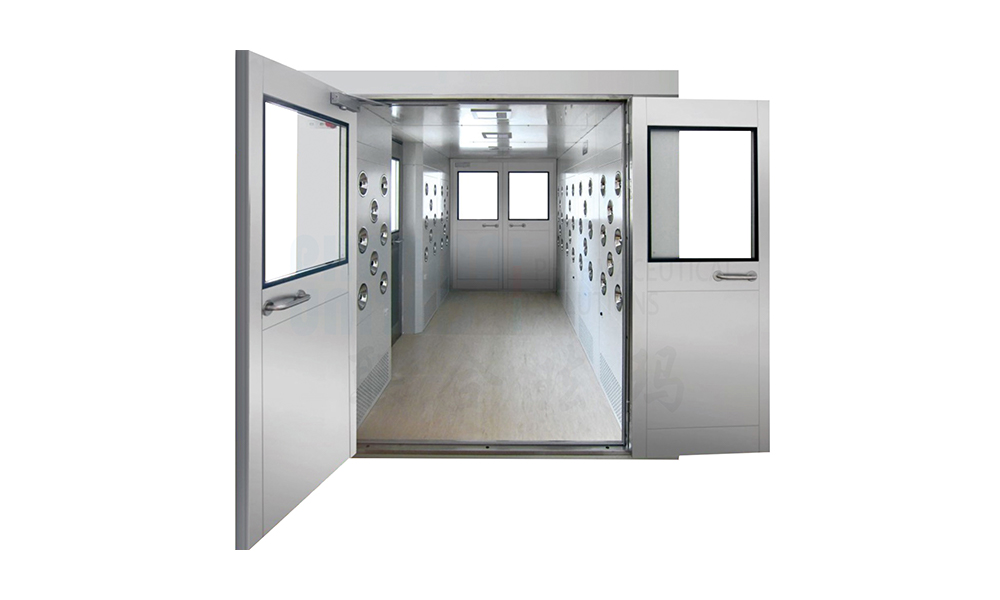 Air Shower for Cleanroom Entry Contamination ControlCleanroom entry equipment using high-velocity HEPA-filtered air jets; supports contamination control at personnel and material entry points and commissioning planning.View Product →
How Prefabrication and Modular Construction Compress the Timeline
Traditional stick-built cleanrooms can be slow because every panel, door, and duct is fabricated on site. Prefabrication moves much of that work into a controlled factory, where quality is more consistent and weather delays are eliminated. Modular cleanroom PODs take this further by delivering entire rooms or tool enclosures that are nearly ready to connect.
On a recent semiconductor project, using prefabricated rockwool cleanroom panels allowed the fit-out team to close walls weeks earlier than a stick-built approach would have allowed. The panels arrived with factory-installed gaskets and precise dimensions, which reduced on-site cutting and waste. That time savings cascaded into commissioning, giving the testing team more room to resolve issues without delaying the overall schedule.
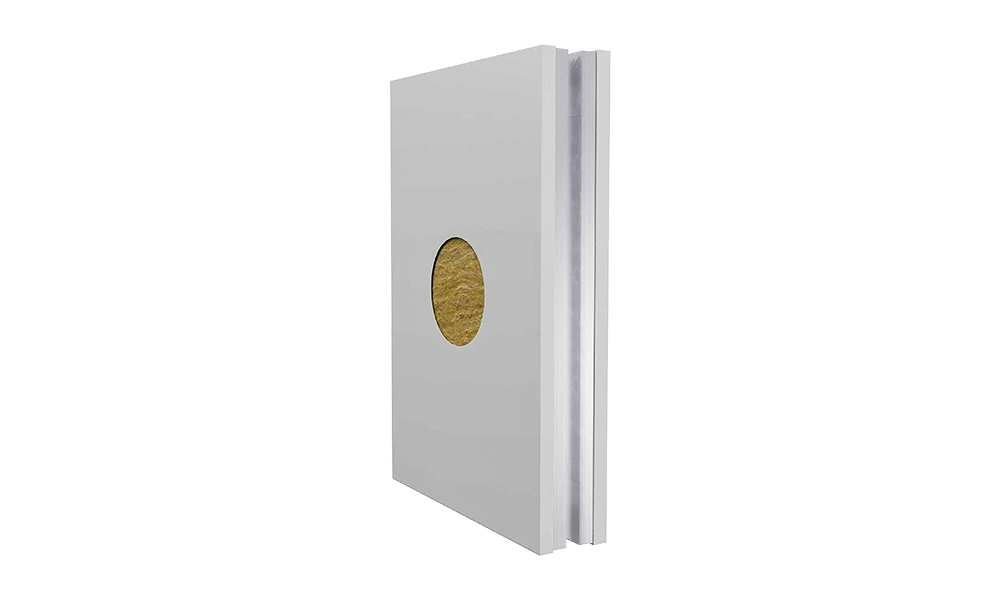 Rockwool Cleanroom Panels for Wall and Ceiling SystemsPrefabricated rockwool sandwich panels for cleanroom walls and ceilings, with fire, thermal, and acoustic insulation and reduced on-site cutting.View Product →
Common Pitfalls in Fab Cleanroom Schedules
Even well-funded projects run into trouble. The most common pitfalls we see include late design changes that force rework, poor coordination between civil and cleanroom contractors, underestimating the time required for AMC and vibration testing, and treating commissioning as an afterthought. Another frequent mistake is fragmenting responsibility across too many vendors, which makes it difficult to hold anyone accountable when a test fails.
One way to avoid these problems is to work with a partner who can handle design, material manufacturing, and installation under one contract. A turnkey approach reduces coordination gaps and keeps the commissioning plan aligned with the construction sequence from day one. You can learn more about our cleanroom turnkey solution and how it integrates each phase.
Working with a Partner Who Understands Both Sides
Semiconductor fabs are unforgiving. A cleanroom that meets ISO Class 5 on paper but fails AMC testing or vibration criteria will not support advanced nodes. That is why we focus on both the physical build and the performance verification. Our team has been delivering cleanroom projects since 2006, and we have seen how the right materials and prefabrication strategy can protect a commissioning schedule.
For the final filtration barrier, HEPA filters are the last line of defense. Their selection, installation, and testing are tightly linked to the overall cleanroom performance. We supply HEPA filters and HEPA supply boxes that are designed for semiconductor-grade applications, with documentation that supports qualification.
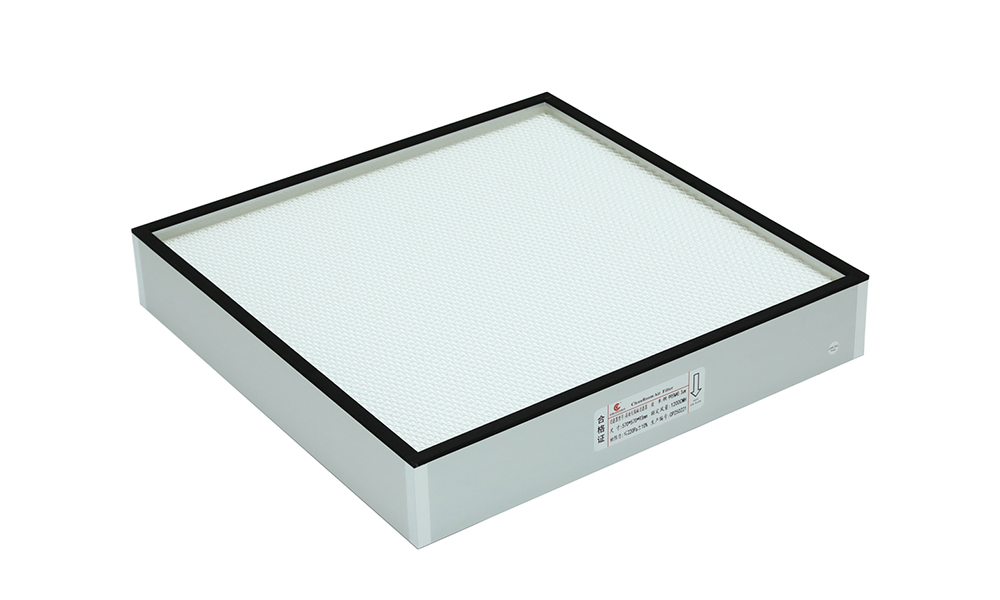 HEPA Filter for Cleanroom HVAC and EquipmentFinal filtration barrier for cleanroom HVAC systems and equipment, removing airborne particles to support controlled environments.View Product →
If you are planning a semiconductor cleanroom, it also helps to review industry-specific requirements early. Our semiconductor cleanroom solutions page outlines the considerations that matter most, from ESD control to chemical compatibility.
A semiconductor fab construction timeline is never just a Gantt chart. It is a living plan that must account for overlapping phases, rigorous commissioning, and the reality that qualification can reveal hidden issues. By understanding the typical durations, investing in prefabrication, and involving commissioning experts early, you can reduce risk and reach first wafer sooner. Whether you are building a new fab or expanding an existing one, the goal is the same: a cleanroom that performs exactly as designed, from the first particle count to full production.


-
Mobile
+86-177 1554 8238
-
E-mail
chin@pharma-united.com
-
Address
No.58 Beiyuan Road, Dianshanhu Town, Kunshan City, Jiangsu Province, China
Copyright © Pharma United Co., Ltd. Rights Reserved.
OEM/ODM Cleanroom Engineering Solution Manufacturers
