

 English
 русский
 Français
 Español
 عربى
ISO 5 Cleanroom Technical Parameters
An ISO 5 environment (formerly Class 100) is the cleanest zone most pharmaceutical, biotech and precision-assembly projects ever need. The class is reached by the air system and operating discipline together, not by wall panels alone, so our job is to supply an enclosure that never becomes the weak point. The table below shows typical design references we use when preparing a quotation; final values are always confirmed against your URS and local code.
| Parameter | Typical ISO 5 design reference | Our supply scope |
|---|---|---|
| Max. particles ≥0.5 µm | 3,520 per m³ (ISO 14644-1) | Particle-free, non-shedding surfaces |
| Airflow pattern | Unidirectional, about 0.36–0.54 m/s at working height | Laminar Air Flow units and ceiling grid |
| Terminal filtration | HEPA H14 or ULPA, leak-tested after installation | HEPA Filter and HEPA Supply Box |
| Pressure differential | 10–15 Pa between adjacent classified rooms | Airtight panels, doors and interlock |
| Temperature / humidity | 20–24 °C / 45–60 % RH (project dependent) | Humidity-stable panel cores |
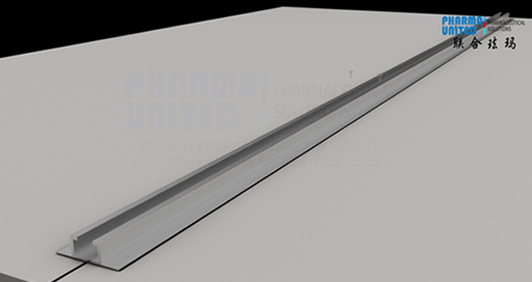
| Wall and ceiling system | Flush, coved, seamless joints, 50 mm panel typical | HPL, PCGI or stainless-faced panels |
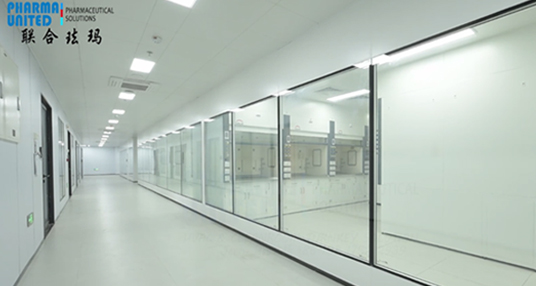
| Door and window | Flush, gasketed, cleanable, interlocked | Stainless steel or HPL doors, flush windows |
| Material transfer | Decontaminable, no direct line-of-sight | Pass Box with interlock |
Why it matters: in ISO 5 zones a single unsealed joint or a chipped surface can release particles into the critical area. We therefore specify rounded coves, flush window frames and gasketed doors as standard rather than optional extras.
- Surface finishes are selected for repeated disinfectant and sporicidal cleaning.
- All penetrations (cables, pipes, sensors) are pre-planned in the shop drawings to avoid on-site cutting.
- Dimensions, thickness and color can be customized for OEM and ODM projects.
Cross-Border Delivery and Local Installation Support
Most of our ISO 5 customers are outside China, so we plan the export route at the same time as the design. Every panel, door and equipment unit is numbered and packed in the order it will be installed, which shortens unloading and avoids mixing parts from different rooms.
Our export workflow normally follows five stages:
- Drawing confirmation: layout, elevation and ceiling plans are reviewed with your engineer and frozen before production.
- Production and pre-assembly: panels are cut, profiled and test-fitted in the factory, and doors are hung and checked before dismantling.
- Export packing: goods are palletized and protected with film, corner guards and moisture barriers, then loaded into 40HQ or 20GP containers.
- Shipping and documents: we prepare the packing list, commercial invoice and certificate of origin, and support FOB, CFR or CIF terms.
- Site support: an installation manual, labeled drawings and video guidance are provided, and an engineer can be arranged for supervision.
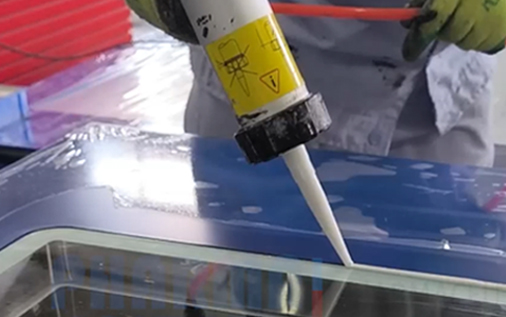
For sites where local labor is available, we work with your contractor and train the team on joint sealing, ceiling grid leveling and door adjustment. Where local skills are limited, we can quote supervised installation or a full turnkey package. The sealing sequence is the most important step in an ISO 5 build, so we recommend that our engineer or an experienced local team handles that stage.
We also advise on customs-friendly packing, such as keeping HEPA filters in separate protected cartons, so sensitive items arrive undamaged.
Tip for first-time importers: check your port's rules for wood-free packaging and plan unloading equipment before the container arrives. Panels are long and need a forklift or crane with soft slings. If the site has limited storage, tell us early and we can split the shipment into stages that match your construction schedule.
Quality Control and Certification for ISO 5 Components
Because ISO 5 spaces handle sterile products and high-value components, we treat quality control as a chain that begins with raw material and ends with the packed crate. We manufacture our own panels, so inspection happens inside our factory rather than at a third-party supplier.
| Stage | What we check | Why it matters |
|---|---|---|
| Incoming material | Steel sheet, HPL face, core material, aluminum profile | Consistent flatness and surface quality |
| In-process | Dimensions, squareness, bonding strength, edge sealing | Tight joints and stable panels |
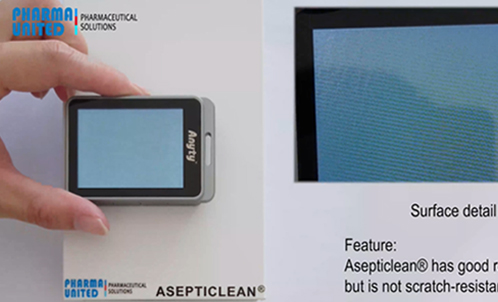
| Surface inspection | Scratches, bubbles, color difference, cleanability | No particle traps in critical areas |
| Door and window | Gasket compression, hinge operation, interlock function | Airtightness and pressure control |
| Pre-shipment | Piece count, labeling, packing condition | Complete delivery, no mix-ups |
Documentation and certificates: we can provide material data sheets, fire and performance test reports where available, and inspection records for each batch. Filters supplied with the project include factory efficiency test records, and on-site integrity testing (such as DOP/PAO leak testing) should be performed by your validation agent after installation.
If your project requires a specific certificate, such as a fire rating, a food-contact statement or a customer audit, please tell us at the quotation stage. We would rather confirm requirements early than promise a document we cannot supply. Customer audits of our factory can be arranged in advance.
We also keep sample pieces of each face material and joint detail, so your quality team can inspect finish, edge sealing and cleanability before mass production begins. Approved samples become the reference standard for the whole order, which prevents disagreement about appearance or tolerance when the goods arrive. This simple step is popular with pharmaceutical customers who work under formal supplier approval procedures.
After-Sales Service and Response Capability
An ISO 5 area is rarely a place where production can stop for long, so we organize after-sales support around fast diagnosis and the correct spare part. Every project is archived with its drawings, bill of materials and batch records, which lets our team identify exactly what was installed in your room.
- Technical response: questions are answered by email, phone or messaging in English, and our five-language website reflects the markets we serve.
- Remote troubleshooting: photos or short videos of a gasket, hinge or panel joint are usually enough for us to recommend a fix.
- Spare parts: gaskets, hinges, handles, interlock parts, window glass and HEPA filters can be supplied from stock or produced quickly because we own the production line.
- Maintenance guidance: we provide cleaning agent compatibility advice and an inspection checklist for doors, seals and ceiling grid.
- On-site service: engineers can be arranged for repair, expansion or modification work.
Typical issues and our approach:
| Issue | Common cause | Our recommended action |
|---|---|---|
| Pressure loss | Worn door gasket or unsealed penetration | Replace gasket, re-seal joint |
| Door not closing flush | Hinge settling after transport | Re-adjust hinge, check frame |
| Rising particle count | Damaged filter or surface | Leak-test filter, inspect surface |
We keep the conversation practical: you tell us what you see, and we help you decide whether it is a quick adjustment or a part that needs replacing.
For urgent cases, such as a damaged door in a running filling area, we prioritize the part list and discuss the fastest shipping method with you. We also suggest keeping a small stock of gaskets and hinges on site, which allows maintenance staff to react the same day while the larger replacement is on its way.
Commercial Terms, Warranty and Lifecycle Cost
The purchase price of an ISO 5 enclosure is only part of the story. Buyers who compare total cost over ten or more years usually place more value on durable surfaces, replaceable sealing parts and easy cleaning than on the lowest quotation. We try to make those factors visible before you decide.
| Item | How we handle it |
|---|---|
| Quotation | Itemized bill of materials with drawings, so you can compare like with like |
| Trade terms | FOB, CFR or CIF depending on project; exact terms confirmed in the quotation |
| Payment | Deposit before production and balance against shipping documents is common; final terms by contract |
| Lead time | Depends on scope and order size; a production schedule is given with the quotation |
| Warranty | Period and scope are stated in the contract for each component group |
| Spare parts | Recommended spare list provided with the order |
Where lifecycle cost is decided:
- Surface durability: HPL and stainless surfaces withstand frequent disinfection better than thin painted finishes, which reduces repair and downtime.
- Seal quality: better gaskets and flush frames reduce air leakage, which lowers fan energy and filter load.
- Modular design: panels can be removed or added later, so future expansion does not require demolition.
- Filter planning: accessible HEPA housings make filter replacement faster and safer.
Warranty does not cover damage from misuse, unauthorized modification or incompatible chemicals, and we explain these limits clearly in the contract rather than leaving them to interpretation.
When comparing offers, ask each supplier what is excluded. A lower quotation may omit coved profiles, window frames, sealant or door hardware that you will need to buy separately. We list these items clearly so that your purchasing team can compare complete scopes rather than partial ones.
Verified Factory Strength Behind Our ISO 5 Supply
Pharma United Co., Ltd. was founded in 2006 and has more than 20 years of experience in cleanroom engineering. We are a manufacturer, not a trading company, so the panels, doors and equipment in your ISO 5 room are produced and controlled by our own team.
| Factory indicator | Information |
|---|---|
| Founded | 2006 |
| Production bases | Kunshan (about 30 km from Shanghai) and Qianjiang |
| Factory area | 20,000 m² |
| HPL cleanroom panel output | Approximately 250,000 m² per year; we are China's largest HPL cleanroom panel manufacturer |
| Annual shipping volume | Over 1,000 forty-foot high-cube containers |
| Team | 60+ staff |
| Service model | Design, manufacture and installation by one team |
Why scale matters for ISO 5 buyers: large panel output means stable raw material purchasing, consistent surface quality and the ability to deliver on schedule even when your project is large. Our Kunshan location near Shanghai port also helps keep export logistics efficient.
Our range covers panels, doors and windows, cleanroom equipment, modular PODs and HEPA products, so your ISO 5 zone and the surrounding support rooms can be supplied from one source with matching finishes and coordinated dimensions. We welcome factory visits, and a showroom video is available if you cannot travel.
You can ask to see production records, completed project references and sample panels before placing an order.
Direct manufacturing also reduces communication loss. When your engineer asks about a joint detail or a door opening, the answer comes from people who actually build the part. That is especially useful in ISO 5 projects, where drawings often need several rounds of refinement before they are final.
ISO 5 Cleanroom FAQ
Q1. Can wall panels alone make a room ISO 5?
No. ISO 5 depends on HEPA filtration, unidirectional airflow, pressure control and correct operating procedures. Our panels, doors and sealing system prevent leakage and particle generation, so the air system can perform as designed.
Q2. Which panel is suitable for an ISO 5 zone?
Smooth, non-shedding faces with sealed edges are preferred. HPL and stainless-faced options are common because they tolerate frequent disinfection. We recommend a panel after reviewing your cleaning agents and fire requirements.
Q3. Do you supply the laminar flow and HEPA components?
Yes. We can supply Laminar Air Flow units, HEPA Filters and HEPA Supply Boxes together with the enclosure. HVAC and AHU design is coordinated with your engineer or local contractor.
Q4. How should materials enter an ISO 5 area?
Through a Pass Box or airlock with interlocked doors, so both sides are never open at the same time.
Q5. What is the difference between ISO 5 and ISO 7?
ISO 5 allows 3,520 particles per m³ at ≥0.5 µm, while ISO 7 allows 352,000. ISO 5 is usually a local critical zone inside a surrounding ISO 7 or ISO 8 room.
Q6. Can you customize sizes and colors?
Yes. As an OEM/ODM manufacturer we adjust thickness, face material, color and door configuration to your drawings.
Q7. Do you provide installation?
We offer drawings and remote guidance, supervised installation or a full turnkey service, depending on your site.
Q8. How do I get a quotation?
Send your layout, target cleanliness grade, application and destination country. We will return an itemized proposal.