

 English
 русский
 Français
 Español
 عربى
Technical Parameters for Humid Environments
Different cores and faces behave very differently when wet. The best choice depends on relative humidity, temperature, washdown method and fire needs. The table gives general guidance.
| Material | Behavior with moisture | Suitability in humid rooms |
|---|---|---|
| HPL face | Dense, non-porous, resists water and steam | Very good |
| Stainless steel face | Does not absorb water; chlorides can cause pitting | Very good with suitable grade and rinsing |
| Pre-coated steel face | Metal and coating resist water; cut edges can rust if open | Good when edges are sealed |
| Closed-cell PU or PIR core | Low water absorption, good insulation | Good, including chilled rooms |
| EPS core | Low absorption but lower insulation and fire performance | Acceptable in dry or moderately humid rooms |
| Rockwool core | Water-repellent treatment, but absorbs if edges are open | Good with sealed edges and no direct splash |
| Paper honeycomb core | Absorbs moisture, may swell and soften | Not recommended in humid rooms |
| Aluminum honeycomb core with aluminum faces | Does not absorb water | Very good, but check alkali cleaners |
Details that decide the result:
- Condensation: cold surfaces below the dew point collect water. Insulated panels and sealed joints reduce this risk.
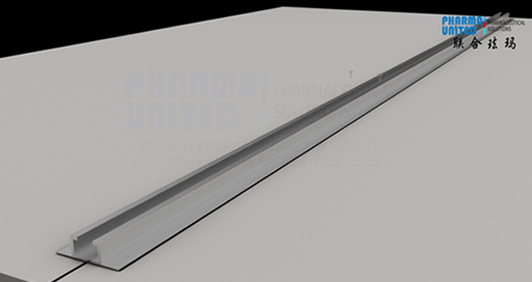
- Edge sealing: every cut edge, window opening and penetration must be sealed.
- Wall base: a raised or sealed base keeps floor water away from panel bottoms.
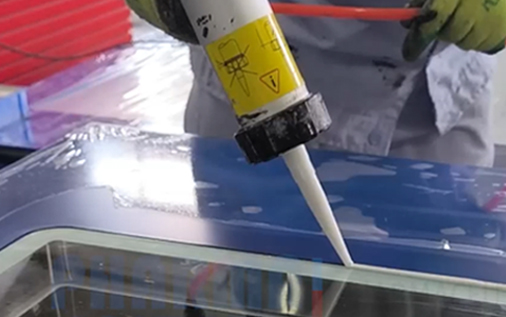
- Sealant: mold-resistant, flexible silicone suits wet areas.
- Ventilation: controlled humidity reduces mold risk, which grows when relative humidity stays above about 70 %.
Water and washdown: splash height, spray pressure and water temperature all affect how long a wall lasts. A wall that is wiped with a damp cloth needs less than a wall that is hosed down with hot water, so please tell us which method applies.
Cross-Border Delivery and Localized Construction Support
Humidity affects goods during shipping as well. Containers can be hot and damp, and panels left in storage can absorb moisture. We therefore pack and protect panels for sea freight and advise on how to store them at your site.
- Moisture protection: panels are wrapped in film and, where needed, packed with moisture barriers and desiccants.
- Sealed edges: edges of rockwool and paper-based panels are sealed before shipment.
- Flat-pack loading: panels are stacked on pallets with corner and edge protection.
- Documents: packing list, commercial invoice and certificate of origin, with FOB, CFR or CIF terms.
- Storage advice: keep panels indoors, off the ground, in a dry place.
Local construction: in humid climates, the way a wall is installed matters as much as the product. The floor should be dry and sealed before panels are set, wet trades should finish before ceilings close, and all cut edges must be sealed on the day they are cut. Windows, switches and pipes through walls need careful sealing.
In tropical sites, air conditioning should be running before panels and ceilings are sealed, to avoid trapping moisture inside. Local building rules apply, and your engineer remains responsible for approvals. We provide sealing guidance and can send an engineer to supervise.
Panels delivered to a humid site should not stand outdoors or in an unventilated container for long. Plan a covered, dry and ventilated storage area before the shipment arrives, and open packing only when installation begins.
Staged shipments can also be arranged when the building is handed over in phases.
Quality Control and Certification
Moisture resistance is a material property and an installation result. No panel is "humidity proof" in every condition, and we do not claim this. We check what we can control in production, and we are open about the limits.
| Control step | Inspection | Why it matters |
|---|---|---|
| Incoming materials | Steel coating, HPL, core, adhesive, profiles | Known quality |
| Core check | Core type and density matched to the order | Right moisture behavior |
| Panel pressing | Bonding, flatness, edge sealing | No water path into the core |
| Face inspection | Scratches, coating damage, bubbles | Intact protective layer |
| Profile and sealant check | Anodizing or coating, sealant type | Corrosion and mold resistance |
| Packing | Count, labels, moisture protection | Dry delivery |
Documents available: material specifications, factory inspection records and, where available, reports on water absorption, fire or thermal performance for the selected panel type.
Please tell us the temperature, relative humidity, washdown method and cleaning agents for each room. We will recommend suitable materials and explain which are not suitable. Customer audits and sample approvals are welcome, and samples can be soaked or steamed by your own team before you decide.
Quality managers often ask for evidence about water absorption, swelling and corrosion resistance. We supply the data that exists for each core and face, send samples for your own soak and steam tests, and explain how edges are sealed in production. Our factory can host audits or live video tours, so reviewers can see the process themselves.
Batch records are kept for each project, so a later question about a particular room can be traced to production.
After-Sales Service and Response Capability
In humid rooms, small defects grow quickly. A cracked sealant line lets water into a core, and a swollen panel needs replacement. Our after-sales service focuses on early detection and neat repair, with matching parts.
- Fast communication: technical questions answered in English by email, phone or messaging.
- Remote diagnosis: photos of swelling, rust, mold or sealant damage help us find the cause.
- Spare parts: panels, profiles, gaskets, sealants, windows and door leaves.
- Upgrade advice: if a core or face fails, we suggest a better material for that position.
- Engineer visits: by arrangement.
Typical moisture problems:
| Observation | Possible cause | Suggested action |
|---|---|---|
| Swollen panel edge | Water entered through open edge | Replace panel, seal edges |
| Black spots at joints | Condensation or mold in sealant | Clean, dry, use mold-resistant sealant, improve ventilation |
| Rust at cut edge | Unsealed cut or damaged coating | Treat rust, seal, repaint or replace |
| Water drops on wall | Surface below dew point | Improve insulation or adjust room conditions |
A monthly walk-through that looks at lower walls, door bases and corners will catch most problems early.
In humid regions, a monthly look at the lower walls, door bases, window frames and ceiling corners will catch most developing problems. Staff should photograph any swelling, stains, black spots or rust, and send the photos with the room name so our engineers can compare them with the project drawings.
Replacement parts are made to the original specification, or to an upgraded specification if moisture was the cause. For urgent cases, we discuss the fastest shipping option and prepare documents in advance.
A small stock of sealant, spare panels and gaskets at the site helps you act the same day.
Commercial Terms, Warranty and Lifecycle Cost
In humid environments, the cheapest panel often becomes the most expensive. Replacing swollen or moldy walls costs more than the price difference between a basic and a moisture-resistant system, and it disrupts production.
| Item | Our approach |
|---|---|
| Quotation | Itemized by area and material type, with drawings |
| Trade terms | FOB, CFR or CIF, defined in the quotation |
| Payment | Commonly a deposit with balance before shipment or against documents; final terms in the contract |
| Warranty | Defined by component group; conditions of use are stated at order |
| Lead time | Given after drawing confirmation |
| Customization | Core, face, thickness, edge sealing, profiles |
Where to spend and where to save:
- Spend on HPL or stainless faces and closed-cell cores in wet and washdown rooms.
- Balance cost with coated steel and sealed edges in moderate humidity.
- Save in dry storage and offices.
- Include dehumidification in the HVAC design, since controlling air moisture is cheaper than repairing walls.
HVAC, drainage, floor waterproofing, ventilation and permits are outside our supply. Warranty applies to the conditions declared at order, and damage from undeclared moisture, steam or chemicals is excluded.
When comparing quotations, ask each supplier to state the core type, face material, edge sealing method, sealant type and packing for humid transport. Some quotations offer a low price by using a core that absorbs water, which only shows its weakness after a few months in service.
We provide itemized quotations and can show alternatives, such as HPL faces in wet rooms and coated steel in drier areas.
Real Factory Strength for Humid-Climate Projects
Our factories operate in the humid Yangtze River Delta, so we know how materials behave in damp air. Pharma United Co., Ltd., founded in 2006, runs two factories in Kunshan and Qianjiang covering 20,000 m², with more than 60 staff. We are a manufacturer, not a trading company.
| Indicator | Information |
|---|---|
| Experience | 20+ years in cleanroom engineering |
| HPL cleanroom panels | About 250,000 m² per year; China's largest HPL cleanroom panel manufacturer |
| Container shipments | More than 1,000 forty-foot high-cube containers per year |
| Location | Kunshan, about 30 km from Shanghai |
| Product range | Panels, doors and windows, equipment, modular PODs, HEPA products |
| Service | Design, manufacture and installation support |
Why this helps buyers in humid regions: we ship regularly to tropical and subtropical markets, and our packing is designed for sea freight. Because panels, profiles, doors and windows come from one source, edge details and sealing match, which helps keep water out.
Samples, references, factory visits and video tours are available on request. Our engineers answer technical questions directly.
Our designers prepare layouts and drawings, our engineers review sealing and edge details, and our production teams run dedicated lines for panels, doors and equipment. Export coordinators prepare packing and documents for shipments to many countries, including tropical regions.
Customers in food, pharmaceutical and hospital fields return for new rooms and spare parts, and we can share photos and videos of completed rooms on request. Visitors are welcome at our factory by arrangement.
Our staff reply promptly and in plain language, and our designers can adapt standard layouts to your building and your process.
Humidity-Resistant Cleanroom Materials FAQ
Q1. Which panel is best in a humid climate?
HPL or stainless faces with PU, PIR or aluminum honeycomb cores are strong choices. Rockwool works with sealed edges. Paper honeycomb is not suitable.
Q2. Why do cut edges matter?
An open edge lets moisture into the core, even if the face is waterproof. Always seal cut edges on site.
Q3. How do I prevent condensation?
Use insulated panels, seal joints, control room temperature and humidity, and avoid cold surfaces in damp air.
Q4. At what humidity does mold grow?
Mold risk increases when relative humidity stays above about 70 %, especially with organic dirt. Good ventilation and cleaning reduce the risk.
Q5. Can panels be steam cleaned?
Many faces can, if joints are sealed and the method is controlled. Tell us your method and temperature.
Q6. Are your panels waterproof?
The faces and closed-cell cores resist water, but the system is waterproof only when edges and joints are sealed.
Q7. How do I get a quotation?
Send your climate data, room humidity, washdown method and destination country.
Q8. Can panels be stored outdoors before installation?
No. Keep them indoors, off the ground and covered, because moisture can damage cores and faces before installation.
Q9. Do you offer samples?
Yes, samples can be sent for your own soak and steam tests.
Q10. Can you help with layout?
Yes, we prepare layout proposals that your project team can adjust.
Q11. Do you offer samples?
Yes, samples of panels, joints and corners can be sent for approval.
Q12. How do I begin?
Send your drawings and requirements, and we will propose a suitable system.