

 English
 русский
 Français
 Español
 عربى
Technical Parameters for Chemical-Resistant Surfaces
The table gives general guidance for common cleaning agents at typical use concentrations. It is a starting point only. Concentration, temperature, contact time and rinsing change the result, so we recommend sample testing with your own agents.
| Agent (typical use) | HPL face | Stainless steel 316L | Polyester-coated steel (PCGI) |
|---|---|---|---|
| Isopropanol or ethanol, 70 % | Good | Good | Good with short contact |
| Sodium hypochlorite (bleach), diluted | Good | Moderate; chlorides can cause pitting, rinse well | Good when diluted and rinsed |
| Hydrogen peroxide, 3–6 % or vaporized | Good | Good | Generally good; check color change |
| Peracetic acid, diluted | Moderate to good | Good to moderate | Moderate |
| Quaternary ammonium, phenolics | Good | Good | Good |
| Strong acids or alkalis, concentrated | Limited | Depends on grade and agent | Limited |
| Organic solvents (acetone, toluene) | Good in short contact | Excellent | Limited; paint may soften |
Details that matter as much as the face:
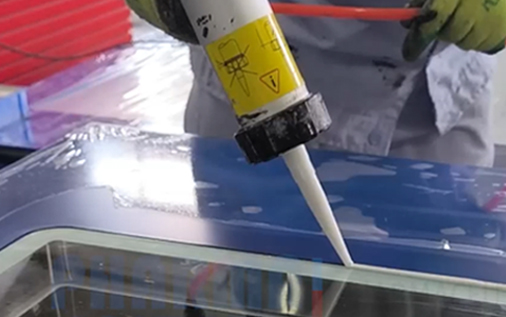
- Edges and joints: sealed edges prevent liquid from entering the core.
- Gaskets and sealants: silicone, EPDM and other materials have different resistance to solvents and oxidizers.
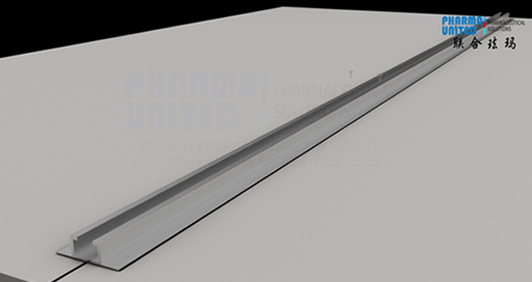
- Aluminum profiles: anodized or coated profiles resist better than bare aluminum, but strong alkalis can still attack them.
- Rinsing: removing residues after chlorine or acid use prolongs surface life.
For severe chemical exposure, such as splashes of strong acid, we may suggest special linings or stainless steel with a suitable grade.
Temperature and contact time: hot cleaners and long soaking times are harder on any surface than a quick wipe at room temperature. If your washdown uses heat or steam, please tell us, because it changes the best choice of face, gasket and sealant.
Cross-Border Delivery and Localized Construction Support
For chemical-resistant projects, the most useful step before shipping is testing your actual agents on actual samples. We handle this as part of the order process, so you see the result before large production begins.
- Agent list: you send the chemicals, concentrations, temperatures and cleaning methods.
- Sample selection: we propose face materials and send samples of HPL, stainless, coated steel, gaskets and sealants.
- Your testing: your team wipes or soaks samples with your agents and checks color, gloss, softening and staining.
- Production and shipping: after approval, panels are produced, protected and shipped with FOB, CFR or CIF terms.
- Installation support: manuals, video guidance or a supervising engineer.
Local construction: chemical resistance can be lost at the installation stage if panels are scratched, cut or sealed with the wrong materials. Edges cut on site must be resealed with compatible sealant, and protective film should stay on until final cleaning. We provide sealing guidance and can recommend sealants that match your chemicals.
Local safety rules for chemical storage, ventilation and spill control also apply, and your engineer remains responsible for compliance.
For large projects, we suggest approving a sample wall with panel face, joints, a door frame and sealant, and testing it with your cleaners before mass production. This small step shows how the whole system behaves, not only the face, and it often reveals weak points, such as a sealant that yellows or a gasket that swells.
Staged shipments can also be arranged when the building is handed over in phases.
Quality Control and Certification
Chemical resistance is a property of a material in a defined situation, so we speak of suitability for your agents and not a general certificate. We do not describe any face as resistant to all chemicals.
| Control step | Inspection | Why it matters |
|---|---|---|
| Incoming materials | Face sheet, laminate, coating, stainless grade, profiles, gaskets | Right material identity |
| Face inspection | Scratches, bubbles, color, coating thickness where applicable | Intact protective layer |
| Panel production | Dimensions, bonding, edge sealing | No liquid path into the core |
| Material match | Check of face and sealant type against your approved sample | Correct product shipped |
| Door and window | Gasket material, frame finish, hardware | Compatible components |
| Packing | Count, labels, film protection | Undamaged delivery |
Documents available: material specifications, factory inspection records and, where available, supplier chemical resistance data or test reports. These are general data, and your own sample test is the best proof for your agents.
If your project requires a standard method, such as a chemical spot test or a stain resistance test on laminates, please tell us the method. We will confirm what data exists and, if needed, arrange a third-party test. Factory audits and sample approvals are welcome.
Quality managers and consultants often request chemical resistance data before approving a surface. We supply the supplier data that exists, send samples for your own tests, and explain how the faces and edges are made and inspected. Our factory can host audits or live video tours, so reviewers can see the process themselves.
Batch records are kept for each project, so a later question about a specific room can be traced to production.
After-Sales Service and Response Capability
When chemicals damage a surface, the first signs are often small: a dull patch, a color change or a soft gasket. We encourage early reporting, because early repair is cheaper and keeps the room clean. Our after-sales service focuses on identifying the cause and supplying matching, more suitable parts.
- Fast communication: technical questions answered in English by email, phone or messaging.
- Remote diagnosis: photos or videos of damaged faces, gaskets and joints help us find the cause.
- Spare parts: panels, door leaves, gaskets, sealants, hinges and windows.
- Upgrade advice: if a face fails, we suggest a better material for the same position.
- Engineer visits: by arrangement.
Typical damage and causes:
| Observation | Possible cause | Suggested action |
|---|---|---|
| Rust spots on stainless | Chloride from bleach left on the surface | Rinse after use, use suitable grade, polish spots |
| Dull or soft paint | Solvent or strong cleaner on coated steel | Replace with HPL or stainless face |
| Sticky or cracked gasket | Chemical attack on rubber or silicone | Replace with compatible gasket |
| Swelling at panel edges | Liquid entered through a damaged edge | Repair seal, replace panel if the core is wet |
A rinse-and-dry step after strong cleaners is the simplest way to extend surface life.
For plants with strong chemicals, we suggest a monthly walk-through that looks specifically at lower wall zones, door edges, gaskets and sealed corners, since these places meet most splashes. Staff should photograph any changes in color, gloss or hardness and send the photos with the room name, so our engineers can compare them with the project drawings.
Replacement parts are made to the original specification, or to an upgraded specification if the cause was chemical attack. For urgent cases, we discuss the fastest shipping option.
Commercial Terms, Warranty and Lifecycle Cost
Chemical-resistant faces cost more at the start, but replacing damaged walls inside a running plant costs far more than choosing the right face once. The cost includes the new panel, downtime, cleaning and any requalification.
| Item | Our approach |
|---|---|
| Quotation | Itemized by area and face type, with drawings |
| Trade terms | FOB, CFR or CIF, defined in the quotation |
| Payment | Commonly a deposit with balance before shipment or against documents; final terms in the contract |
| Warranty | Defined by component group; chemical damage is assessed against the agents declared at order |
| Lead time | Given after drawing confirmation and sample approval |
| Customization | Face material, thickness, color, sealant and gasket type |
Ways to control lifecycle cost:
- Declare all agents early: including occasional ones, such as spill cleanup chemicals.
- Use mixed specifications: stainless where exposure is heavy, HPL for general rooms and coated steel in dry areas.
- Protect high-splash zones: lower wall areas around sinks and tanks can use a stronger face.
- Train staff: correct dilution and rinsing prevent most damage.
Cleaning chemicals, spill control, ventilation, HVAC and permits are outside our supply. Our warranty covers the agents declared at order and excludes damage from undeclared or misused chemicals.
When comparing quotations, ask each supplier to state the face material, grade, thickness, sealant, gasket material and packing. Some quotations list only the panel and leave out sealants and gaskets, which are often the first parts to fail. We list them clearly and can show alternatives that match your budget.
We are glad to explain every line of our quotation.
Real Factory Strength for Chemical-Exposed Projects
Surfaces that face chemicals need consistent materials and careful production. Pharma United Co., Ltd., founded in 2006, runs two factories in Kunshan and Qianjiang covering 20,000 m², with more than 60 staff. We are a manufacturer, not a trading company.
| Indicator | Information |
|---|---|
| Experience | 20+ years in cleanroom engineering |
| HPL cleanroom panels | About 250,000 m² per year; China's largest HPL cleanroom panel manufacturer |
| Container shipments | More than 1,000 forty-foot high-cube containers per year |
| Location | Kunshan, about 30 km from Shanghai |
| Product range | Panels, doors and windows, equipment, modular PODs, HEPA products |
| Service | Design, manufacture and installation support |
Why this helps buyers with chemical exposure: as a large HPL cleanroom panel producer, we control faces, cores and edge sealing, and we can offer several face materials in one system. Because panels, doors, windows and Pass Boxes come from one source, finishes and sealing details match.
Samples for chemical testing, references, factory visits and video tours are available on request. Our engineers answer technical questions directly.
Our designers prepare layouts and drawings, our engineers review sealing and interface details, and our production teams run dedicated lines for panels, doors and equipment. Export coordinators prepare packing and documents for shipments to many countries.
Customers in pharmaceutical, laboratory and industrial fields return for new rooms and spare parts, and we can share photos and videos of completed projects on request. Visitors are welcome at our factory by arrangement.
Our staff reply promptly and in plain language, and our designers can adapt standard layouts to your building.
Chemical-Resistant Cleanroom Surfaces FAQ
Q1. Which face resists the most chemicals?
Stainless steel of a suitable grade resists many solvents and cleaners, while HPL resists a wide range of disinfectants. Chlorides can damage stainless, so the best face depends on your agents.
Q2. Can bleach damage stainless steel?
Yes, residual chlorides can cause pitting over time. Dilute use, thorough rinsing and a suitable grade such as 316L reduce the risk.
Q3. Can painted steel panels handle solvents?
Their coatings can soften with strong solvents. For solvent areas, HPL or stainless faces are usually better.
Q4. How do I test a sample?
Wipe or soak a small sample with your agent at your real concentration and contact time, then check color, gloss, hardness and staining after drying.
Q5. Does the sealant matter?
Yes. Sealants and gaskets can fail before the panel face does, so we select them for your chemicals.
Q6. Is your warranty valid for chemical damage?
Warranty terms cover the agents declared at order. Damage from undeclared or misused chemicals is excluded.
Q7. How do I request samples or a quotation?
Send your agent list, concentrations, floor plan and destination country.
Q8. Can you test my chemicals for me?
We send samples so that you can test with your own agents. If a formal laboratory test is required, we can discuss arranging one at your cost.
Q9. Does temperature change the result?
Yes. Heat and long contact times make attack more likely, so please share your washdown conditions.
Q10. Can you help me choose between HPL and stainless?
Yes. Send your agents and washdown method, and we will recommend a face for each room.