

 English
 русский
 Français
 Español
 عربى
Technical Parameters for GMP Cleanroom Materials
The following table summarizes the properties we normally discuss with GMP project teams. The final specification should come from your user requirement specification (URS), risk assessment and the guideline that applies in your country. Values shown are typical references, not guarantees for every project.
| Requirement | What GMP reviewers usually look for | Our typical solution |
|---|---|---|
| Surface condition | Smooth, impervious, no cracks, easy to clean | HPL, PCGI or stainless steel faces |
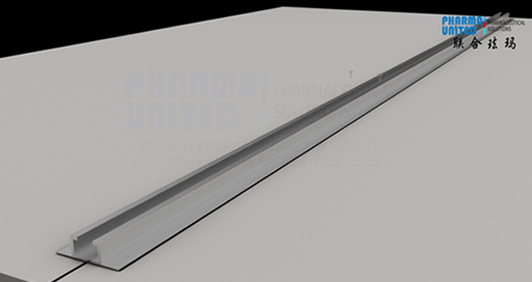
| Joints and corners | Minimal ledges, sealed joints, coved junctions | Aluminum cove profiles, flush frames |
| Cleaning compatibility | Resistance to disinfectants and sporicidal agents | Surfaces tested against your cleaning list |
| Panel thickness | Rigid, flat wall with stable core | 50 mm typical, other sizes on request |
| Core options | Fire, thermal or weight requirements | Rockwool, PU, PIR, EPS, honeycomb |
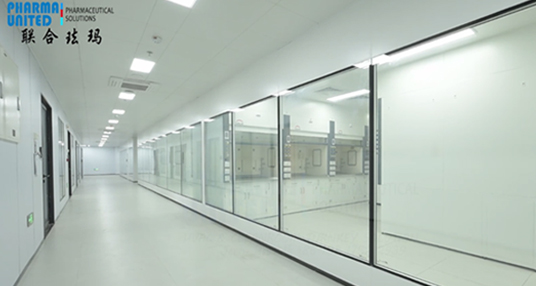
| Door and window | Flush, gasketed, cleanable, interlocked where needed | Flush doors, double-glazed windows |
| Pressure control | Differential between rooms of different grade, often 10–15 Pa | Airtight envelope, interlock, Pass Box |
| Particle control | Non-shedding surfaces and HEPA filtered air | HEPA Filter, Supply Box, Laminar Air Flow |
| Traceability | Batch and material records | Factory records, packing marks |
Design reminders: keep penetrations to a minimum, avoid unnecessary shelves and window sills, and plan pipe and cable routes before the walls are made. Changes after installation are costly and can disturb a qualified environment.
We can adjust dimensions, colors and configuration for OEM and ODM orders.
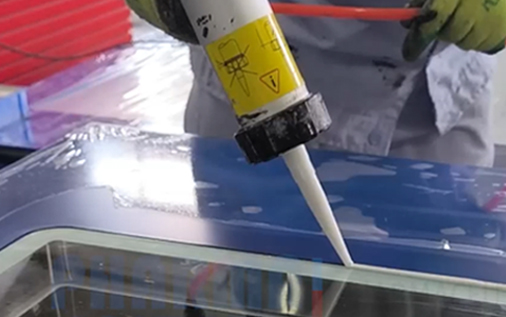
We recommend sharing your cleaning agent list, disinfectant rotation and room humidity range with us at the start. These details decide which face material and sealant are suitable, and they prevent problems such as discoloration, softening of joints or corrosion of metal parts later in service.
Cross-Border Delivery and Localized Construction Support
GMP projects usually carry fixed schedules tied to regulatory inspections, tender conditions or product launches, so we plan overseas supply backward from your qualification and inspection dates rather than only from the factory timetable.
- Drawings first: layout, elevations, ceiling plans and a door and window schedule are confirmed before production starts.
- Room-by-room packing: materials are grouped and numbered per room, which supports orderly installation and simple site checking against the bill of materials.
- Protected shipping: panels, glass and filters are packed to prevent corner damage and moisture exposure during sea freight.
- Export documents: packing list, commercial invoice and certificate of origin, with FOB, CFR or CIF terms.
Local construction coordination: a GMP facility involves civil, HVAC, electrical, process piping and cleanroom contractors working together. We help by marking utility openings on drawings, confirming ceiling load and access requirements, and advising on the sequence in which trades should enter the room. Wet work and heavy equipment should be finished before the final panel sealing, otherwise damage and dust return to the cleanroom.
Where your local team is new to cleanroom work, we offer video guidance, a supervising engineer or a full turnkey installation. We also advise on cleaning, protection of finished surfaces and handover documentation, so that the room enters qualification in a good condition.
For large GMP projects we also suggest a pre-installation meeting by video call with your project manager, site supervisor and our engineer. Reviewing the drawings together, one room at a time, normally removes most doubts about openings, door swings and ceiling access before the first container leaves the port.
Quality Control and Certification
It is important to be clear about how GMP works. Regulators inspect your facility and your quality system; they do not issue a GMP certificate for a wall panel or a door. What a supplier can do is provide consistent products with documents that make your own qualification easier. This is the approach we take.
| Control stage | Inspection content | Value for your qualification |
|---|---|---|
| Raw materials | Sheet metal, HPL, core, profiles, gaskets | Known material identity |
| Panel production | Dimensions, flatness, bonding, edge sealing | Repeatable quality |
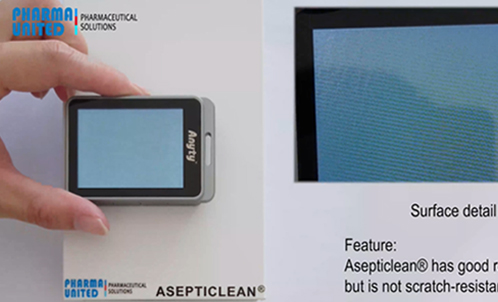
| Surface check | Scratches, bubbles, color, cleanability | Fewer particle traps |
| Door and equipment | Function test, gasket contact, interlock operation | Reliable operation at installation |
| Packing | Quantity, labels and condition check | Traceable delivery |
Documents we can supply: material specifications, factory inspection records, filter test records and, where available, test reports for fire or surface performance. These support your design qualification (DQ) and installation qualification (IQ) files.
If a certificate or a supplier questionnaire is part of your approval process, please send it at the start. We will tell you plainly what we can provide and will not claim approvals that do not exist. Supplier audits of our factory can be arranged in advance, and sample panels or doors can be provided for your quality team.
Our team can also help you prepare for supplier evaluation by answering technical questionnaires, explaining production steps and showing how each batch is recorded. If your auditors want to see how panels are pressed, cut and packed, we can arrange a factory walk-through or a live video tour, so your quality unit can form its own judgment of our process.
After-Sales Service and Response Capability
In a GMP environment, repairs must be controlled: parts should match the originals and changes should be documented. Our after-sales approach is built on project records that show exactly which material, model and batch was supplied, so a replacement part can be identified quickly and consistently.
- Technical support: responses in English by email, phone or messaging, with Russian, French, Spanish and Arabic website versions for other markets.
- Remote assistance: photos or short videos of gaskets, hinges and joints are usually enough for a first diagnosis.
- Like-for-like spare parts: gaskets, hinges, closers, handles, windows and HEPA Filters made to the original specification.
- Change support: if you add a room, a door or a pass box, we provide updated drawings that you can use in your change control record.
Suggested routine inspection:
| Item | Frequency | Note |
|---|---|---|
| Door closing and interlock | Daily by users | Report faults at once |
| Gaskets and hinges | Monthly | Replace worn parts |
| Joint sealant and corners | Every six months | Record findings |
| Filter integrity and pressure | As your SOP requires | Performed by qualified staff |
Our engineers can join a video call with your maintenance team when a problem is difficult to describe.
We also encourage customers to keep a record of every door, panel and filter fitted in the room, including installation date and position. When this record is combined with our project archive, finding the correct replacement part becomes quick and removes guesswork during an urgent repair.
For long-term customers, we can propose a yearly check-up plan with a remote review of photos and maintenance logs, which helps catch small issues before they affect production.
Commercial Terms, Warranty and Lifecycle Cost
A GMP facility is a long-term asset, so the cheapest wall is rarely the cheapest outcome. Downtime, re-qualification and repair of damaged surfaces often cost far more than the original price difference between two materials. We help buyers weigh these factors before ordering.
| Item | Our approach |
|---|---|
| Quotation | Itemized by room and component, with drawings and a bill of materials |
| Trade terms | FOB, CFR or CIF, confirmed per project |
| Payment | Commonly a deposit with balance before shipment or against documents; final terms in the contract |
| Warranty | Period and scope defined by component group in the contract |
| Spare parts | Recommended spare list included with the proposal |
| Customization | Size, color, thickness and door configuration for OEM and ODM orders |
Where lifecycle cost is decided:
- Surface durability: repeated disinfection can damage weak finishes, so we match the surface to your actual cleaning agents.
- Airtightness: a tight envelope reduces air leakage, which lowers fan energy and stabilizes pressure.
- Modularity: future capacity expansion becomes an addition rather than a demolition.
- Easy maintenance: accessible HEPA housings and replaceable gaskets shorten shutdowns.
Warranty limits, such as damage from unsuitable chemicals or unauthorized changes, are written clearly in the contract.
Buyers often ask how to compare quotations from different suppliers. We suggest checking panel thickness, face material, core type, profile type, door hardware, glass specification and packing method line by line, because small differences in these items strongly affect both price and service life. We are happy to explain every line of our quotation and to offer alternatives if you need to adjust the budget.
Real Factory Strength for GMP Projects
Pharmaceutical buyers rightly ask who actually makes the product. Pharma United Co., Ltd. was founded in 2006 and operates two production bases in Kunshan and Qianjiang with 20,000 m² of factory area and a team of more than 60 staff. We are a manufacturer, not a trading company.
| Indicator | Information |
|---|---|
| Experience | 20+ years in cleanroom engineering |
| HPL cleanroom panel output | About 250,000 m² per year; China's largest HPL cleanroom panel manufacturer |
| Export volume | Over 1,000 forty-foot high-cube containers per year |
| Location | Kunshan, roughly 30 km from Shanghai |
| Scope | Panels, doors and windows, equipment, modular PODs, HEPA products |
| Service | Design, manufacture and installation support |
Why this helps a GMP buyer: direct production gives clearer traceability, quicker answers to technical questions and better control over delivery dates. Because panels, doors and equipment come from one source, sizes, finishes and interfaces match, which reduces site adjustments that can compromise sealing.
You are welcome to audit the factory, review production records, request sample panels or ask for project references in similar markets. A showroom video is available for remote review.
Our production lines for HPL panels, door assembly and equipment fabrication work under internal quality procedures, and our staff include designers, engineers, production supervisors and export coordinators. This structure allows a project to move from drawing review to production and shipment without losing information between departments.
Repeat customers regularly return for additional rooms and later expansions, which shows the value of working with a stable supplier.
Visitors can see the full process, from sheet cutting and panel pressing to door assembly, inspection and packing.
GMP Compliant Cleanroom Materials FAQ
Q1. Are your panels "GMP certified"?
No product receives a GMP certificate on its own. GMP compliance belongs to the facility and its quality system. Our panels are designed with smooth, sealed, cleanable surfaces and come with records that support your qualification.
Q2. Which GMP guidelines do you support?
We supply to projects following WHO, PIC/S, EU GMP, FDA cGMP and national codes. Your project team defines the required grades, and we supply materials that fit them.
Q3. What surface is best for frequent disinfection?
HPL and stainless steel faces perform well under repeated cleaning. Tell us your disinfectants, and we will advise on compatibility.
Q4. Do you provide qualification documents?
We provide specifications, inspection records and drawings that help prepare DQ and IQ. Performance testing is carried out by your qualified agent.
Q5. Can you supply the whole cleanroom?
We supply the envelope, doors, windows, equipment and HEPA products, and can coordinate HVAC with your engineer or contractor.
Q6. Can the system be expanded later?
Yes. Modular panels allow new rooms and openings to be added with limited disruption.
Q7. How do I request a quotation?
Send the room list, required grades, drawings and destination country, and we will prepare an itemized proposal.
Q8. Can existing non-GMP rooms be upgraded?
Often yes. Modular panels can be installed inside an existing building, and we can advise which areas need new surfaces, doors or filtration to approach GMP expectations.
Q9. Do you offer sample panels?
Yes. Samples of faces, joints and doors can be sent for your team to test with your own cleaning agents.