

 English
 русский
 Français
 Español
 عربى
Technical Parameters for Anti-Static Finishes
ESD programs commonly follow ANSI/ESD S20.20 or IEC 61340-5-1. They define conductive, dissipative and insulative materials by electrical resistance: dissipative materials are generally in the range from 10⁴ up to below 10¹¹ ohm, and many plants target 10⁶ to 10⁹ ohm for surfaces that people or products touch. Your customer and ESD coordinator set the final limits.
| Element | Typical ESD reference | Role of the cleanroom envelope |
|---|---|---|
| Floor with footwear | Resistance to ground, often below 10⁹ ohm, with body voltage below 100 V | Flooring is the main control; wall bases should not isolate it |
| Work surfaces | Dissipative, grounded | Supplied with the work station, not the wall |
| Wall and ceiling panels | Surface resistance often 10⁶ to 10⁹ ohm where specified | Anti-static face reduces charge build-up and dust attraction |
| Doors and handles | Dissipative surfaces | Matching anti-static finish where people touch |
| Humidity | About 40–60 % RH | Airtight envelope helps keep humidity stable |
| Ionization | Air ionizers for insulators that cannot be grounded | Ceiling or bench mounted, coordinated with air supply |
| Grounding | Common point ground, tested resistance to earth | Panel frames and profiles can be bonded when specified |
Design points:
- Avoid insulating plastics on frequently touched surfaces, since friction can generate high voltages.
- Plan grounding early: panel frames, doors and equipment should connect to a known ground.
- Measure on site: resistance is checked with a calibrated meter after installation.
- Keep humidity stable: dry air increases static risk.
For static-sensitive processes, it also helps to separate high-friction activities, such as unpacking plastic films, from areas where exposed devices are handled, and to place ionizers where air flows over the work.
Cross-Border Delivery and Localized Construction Support
ESD projects are usually part of an electronics plant start-up, and they must be ready when machines arrive. We plan shipments around your machine delivery and ESD audit dates, with clear information about what is supplied.
- Specification review: you send the ESD standard, resistance targets and test method.
- Material proposal: we propose suitable anti-static faces, with data sheets, and send samples.
- Production and numbering: panels and doors are produced and labeled by position.
- Packing and shipping: flat-pack loading in 20GP or 40HQ containers, with documents and FOB, CFR or CIF terms.
- Installation support: manuals, video guidance or a supervising engineer.
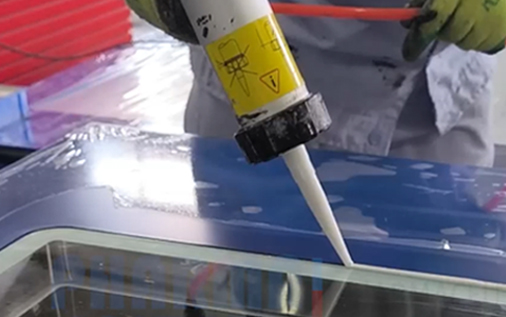
Local construction: the ESD result depends on grounding and installation details, not only on the panel face. Frame bonding, ground connections, floor-to-wall transitions and the choice of sealants and tapes should be planned together with the electrical contractor and the flooring contractor. For example, an insulating sealant line along a floor edge can interrupt a grounding path.
After installation, an ESD coordinator or testing company should measure surface resistance, resistance to ground and body voltage with calibrated instruments. We supply drawings and material data to support that work. Local electrical safety rules apply, and your engineer remains responsible for compliance.
For larger plants, we suggest a short meeting between your ESD coordinator, the electrical contractor, the flooring contractor and our engineer before production starts. Agreeing the grounding points, wall-to-floor transitions and door finishes on one drawing prevents most conflicts and avoids a failed audit after construction.
Quality Control and Certification
ESD compliance is verified by measurement on site and by audits against a standard such as ANSI/ESD S20.20. A wall panel is not "ESD certified" on its own, and we do not claim this. We supply consistent products with data that your ESD coordinator can check.
| Control step | Inspection | Why it matters |
|---|---|---|
| Incoming materials | Anti-static laminate or coating, core, profiles | Correct material identity |
| Face inspection | Scratches, bubbles, color, surface condition | Intact conductive layer |
| Panel production | Dimensions, bonding, edge sealing | Tight joints |
| Resistance check | Review of data sheet against your target; spot check where agreed | Fit with the specification |
| Door and equipment | Function test of doors, Air Shower, Pass Box | Ready for installation |
| Packing | Count, labels, film protection | Undamaged delivery |
Documents available: material specifications, factory inspection records and, where available, resistance data or test reports for the selected face. Please tell us the test method and humidity conditions, because resistance readings vary with them.
If your audit needs a specific report, such as surface resistance measured to a named method, please tell us at the quotation stage. We will confirm what exists and arrange a test if needed. Customer audits and sample approval are welcome.
Brand owners and electronics customers often audit suppliers and request evidence of ESD control. We answer technical questions, share material data and samples, and welcome factory visits or live video tours. Batch records are kept for each project, so later questions about a specific room can be traced to production.
We recommend that you confirm the measurement method and humidity condition with your ESD coordinator, since results can differ between methods.
After-Sales Service and Response Capability
An ESD protected area must stay within its limits over years of use. Wear, dirt and wrong cleaning agents can raise surface resistance and cause audit findings. Our after-sales service focuses on helping you find the cause and restore the original performance.
- Fast communication: technical questions answered in English by email, phone or messaging.
- Remote diagnosis: photos and measurement readings help us suggest likely causes.
- Spare parts: anti-static panels, door leaves, handles, gaskets and windows.
- Cleaning advice: agents and methods that protect the anti-static layer.
- Engineer visits: by arrangement.
Typical problems:
| Observation | Possible cause | Suggested action |
|---|---|---|
| Surface resistance too high | Dirt film, wax or unsuitable cleaner | Clean with approved agent, retest |
| Surface resistance too low or erratic | Moisture, damage to surface | Dry, inspect, repair or replace |
| Static events increase | Dry air, broken grounding | Check humidity, test grounding |
| Door handle sparks | Insulating finish or poor ground | Fit dissipative handle, check bonding |
We suggest recording measurements at fixed positions every few months. A trend line shows early drift, and it supports your audit file.
In ESD protected areas, routine measurement is part of the audit cycle, so any change in readings deserves attention. When a reading falls outside the limit, send us the room name, the position, the instrument and the humidity at the time of the test. With the stored drawings and project records, our engineers can suggest whether the cause is the surface, the cleaning agent, the grounding or the environment.
Replacement parts are made to the original specification, so appearance and electrical behavior match the existing system. For urgent cases, we discuss the fastest shipping option and prepare documents in advance.
A small stock of spare door handles, gaskets and anti-static panels helps you act the same day.
Commercial Terms, Warranty and Lifecycle Cost
Anti-static faces add cost compared with standard panels. The question is how much risk each area carries. One damaged component can cost far more than an entire wall system, so ESD protection is often worth the premium at work stations and entry points, and less so in storage or offices.
| Item | Our approach |
|---|---|
| Quotation | Itemized by area and face type, with drawings |
| Trade terms | FOB, CFR or CIF, defined in the quotation |
| Payment | Commonly a deposit with balance before shipment or against documents; final terms in the contract |
| Warranty | Defined by component group in the contract |
| Lead time | Given after drawing confirmation and sample approval |
| Customization | Face type, thickness, color, sizes, door finish |
Where to spend and where to save:
- Spend on anti-static surfaces and grounding in EPA (ESD protected areas) where sensitive devices are handled.
- Balance cost in corridors by using standard panels with dissipative floors.
- Save in warehouses, offices and non-ESD areas.
- Invest in humidity control, which often gives more ESD benefit than any panel choice.
Flooring, work stations, wrist straps, ionizers, monitoring and audits are outside our supply. Warranty exclusions are stated clearly in the contract.
When comparing quotations, ask each supplier to state the face material, the resistance range, the test method and humidity condition, and whether the data is for the face or the finished panel. Some offers quote only the best laboratory value, which is not a reliable guide to site performance.
We provide itemized quotations and can show alternatives, for example anti-static faces in assembly rooms and standard faces in corridors.
Real Factory Strength for ESD-Sensitive Projects
Electronics buyers need consistent surfaces and reliable data. Pharma United Co., Ltd., founded in 2006, runs two factories in Kunshan and Qianjiang covering 20,000 m², with more than 60 staff. We are a manufacturer, not a trading company.
| Indicator | Information |
|---|---|
| Experience | 20+ years in cleanroom engineering |
| HPL cleanroom panels | About 250,000 m² per year; China's largest HPL cleanroom panel manufacturer |
| Container shipments | More than 1,000 forty-foot high-cube containers per year |
| Location | Kunshan, about 30 km from Shanghai |
| Product range | Panels, doors and windows, equipment, modular PODs, HEPA products |
| Service | Design, manufacture and installation support |
Why this helps ESD buyers: Kunshan is a major electronics manufacturing area, and we know the needs of nearby plants. Because panels, doors, windows and equipment come from one source, finishes and grounding details can be planned together.
Samples, references, factory visits and video tours are available on request. Our engineers answer technical questions directly.
Our designers prepare layouts and drawings, our engineers review grounding and interface details with your electrical contractor, and our production teams run dedicated lines for panels, doors and equipment. Export coordinators prepare packing and documents for shipments to electronics clusters in many countries.
Electronics customers return for new lines and spare parts, and we can share photos and videos of completed rooms on request. Visitors are welcome at our factory by arrangement, and we reply promptly and in plain language.
Our staff can also adapt standard layouts quickly when a line changes.
Our staff reply promptly and in plain language, and our designers can adapt standard layouts to your building and your process.
ESD Anti-Static Cleanroom Finishes FAQ
Q1. Do walls need to be anti-static?
Floors and work stations matter most, but anti-static walls and doors reduce charge build-up and dust attraction in sensitive areas. Your ESD coordinator decides.
Q2. What resistance should surfaces have?
Dissipative surfaces are generally from 10⁴ up to below 10¹¹ ohm, and many plants aim for 10⁶ to 10⁹ ohm. Your customer or standard sets the limit.
Q3. Are your panels ESD certified?
No panel is certified on its own. ESD compliance is shown by on-site measurement and audit. We supply surfaces and data to support it.
Q4. Does humidity matter?
Yes. Very dry air raises static charge, so many plants keep about 40–60 % RH.
Q5. Can you ground the panel frames?
Yes, frames and profiles can be bonded when this is specified. The electrical contractor completes the connection to earth.
Q6. Can cleaning reduce the effect?
Some waxes and cleaners leave an insulating film. Use agents approved for ESD surfaces.
Q7. How do I request samples or a quotation?
Send your ESD standard, resistance targets, floor plan and destination country.
Q8. Can I test a sample myself?
Yes. Samples can be sent, and your team can measure surface resistance at your standard humidity with a calibrated meter.
Q9. Does ESD control affect cleanroom class?
They are separate requirements, but they work together. Static attracts particles, so ESD control helps cleanliness, and a clean room reduces dirt films on ESD surfaces.
Q10. Can you help with layout?
Yes, we prepare layout proposals that your ESD coordinator can adjust.