

 English
 русский
 Français
 Español
 عربى
Technical Parameters and Regional Requirements
Latin American projects face a wide variety of conditions. Your consultant and national authority set the final requirements. The table lists points that we discuss with projects in the region.
| Topic | Typical situation | What it means for the cleanroom |
|---|---|---|
| GMP frameworks | Mexico follows COFEPRIS rules, Brazil follows ANVISA rules, and other countries have their own; several are aligned with PIC/S or WHO GMP | Grades A to D, with ISO classes, as your authority requires |
| Altitude | Cities such as Mexico City and Bogotá lie above 2,000 m, where air is thinner | HVAC and fan sizing and pressure sensors must allow for lower air density |
| Earthquakes | Seismic zones along the Pacific coast and in Central America | Ceiling, wall and equipment anchorage designed to local seismic codes |
| Tropical climate | Heat and humidity in coastal and lowland areas | Moisture-resistant materials, sealed edges, dehumidification |
| Electronics and device plants | Nearshoring growth, especially in Mexico | ESD control, class ISO 7 and 8 rooms, FDA-oriented documentation |
| Language | Spanish, and Portuguese in Brazil | Spanish documents can be discussed; Portuguese by arrangement |
| Equipment safety and electrical | Local electrical and machine safety rules apply | Importer confirms registration or labeling needs |
Design points for the region:
- Altitude: at about 2,200 m, air density is roughly three quarters of sea level, which affects fan capacity, filter pressure drop and sensor readings.
- Seismic design: lightweight panels help, but hangers, bracing and anchors must follow local seismic codes, designed by a local engineer.
- Humidity: HPL or stainless faces, closed-cell cores and sealed edges for humid coastal sites.
Cross-Border Delivery and Localized Construction Support
Goods for Latin America travel by sea to ports such as Manzanillo and Lázaro Cárdenas in Mexico, Santos in Brazil, Callao in Peru, Cartagena in Colombia, San Antonio in Chile and Buenos Aires in Argentina. Sea transit is commonly four weeks or more, with longer times to the Atlantic coast, plus customs and inland transport.
- Trade terms: FOB, CFR or CIF, with documents prepared in advance.
- Documents: packing list, commercial invoice and certificate of origin, with Spanish translations of key documents where useful.
- Importer: a local importer or agent normally handles registration, duties, taxes and customs clearance.
- Taxes: import duties and other taxes can be high in some countries, especially Brazil, and should be included in the budget.
- Packing: flat-pack loading with moisture protection, and labels by position.
Local installation: projects often use a local contractor with our drawings, manual and remote support, or a supervising engineer for critical stages. Seismic anchorage, local building and fire codes, and site safety rules apply, and your engineer and contractor remain responsible for them.
Currency changes and payment conditions can affect projects, so we discuss payment methods early. Common options are T/T or letter of credit, agreed in the contract.
For Latin American projects, we suggest a short planning call between your importer, your contractor, your engineer and our team. Agreeing documents for customs, delivery dates and site readiness on one plan prevents most delays. Staged shipments can also be arranged to match the building schedule.
Our staff reply promptly and in plain language, and our designers can adapt standard layouts to your building and your process.
Quality Control and Certification
Latin American customers, especially exporters to the United States, often want strong records. We manufacture the main components, inspect them at the factory and keep batch records, and we say honestly which documents exist.
| Control step | Inspection | Value for the project |
|---|---|---|
| Incoming materials | Sheet, face, core, profiles, gaskets, glass | Known quality |
| Panel production | Dimensions, flatness, bonding, edge sealing | Tight, flush joints |
| Moisture check | Core type and edge sealing against the order | Right behavior in humid rooms |
| Door and equipment | Gasket contact, interlock and function tests | Reliable operation |
| Packing check | Count, labels, moisture protection | Complete delivery |
| Records | Batch records kept for each order | Traceability |
Documents available: drawings, material specifications, factory inspection records, filter data, wiring diagrams and, where available, fire, thermal or surface test reports.
Local authorities may require registrations, certificates or labeling for some products, especially electrical equipment. Please tell us early, so we can confirm what exists and what your importer must obtain. Customer audits of our factory and sample approvals are welcome.
Latin American buyers and their customers often ask for supplier information, data sheets and samples before approval. We prepare these together, send samples of panels, joints and gaskets and welcome factory visits or live video tours. Batch records are kept for each project, so later questions can be traced to production.
We recommend agreeing on the list of documents with your regulator or customer at the start.
Our staff reply promptly and in plain language, and our designers can adapt standard layouts to your building and your process.
After-Sales Service and Response Capability
Our time zone overlaps partly with Latin America, and we answer technical messages promptly. We keep drawings, bills of materials and batch records for each project, so we can identify parts and causes quickly.
- Fast communication: technical questions answered in English by email, phone or messaging, and our website has a Spanish version.
- Remote diagnosis: photos, videos and test data help us find causes.
- Spare parts: gaskets, hinges, windows, panels and filters, shipped by sea or by air for urgent needs.
- Expansion: new rooms or lines can be designed and supplied as the plant grows.
- Engineer visits: by arrangement.
Typical issues in the region:
| Observation | Possible cause | Suggested action |
|---|---|---|
| Pressure lower than design at altitude | Fan capacity reduced by thin air | Review HVAC sizing with the designer |
| Damaged ceiling after an earthquake | Anchors or bracing inadequate | Inspect, repair and reinforce to local code |
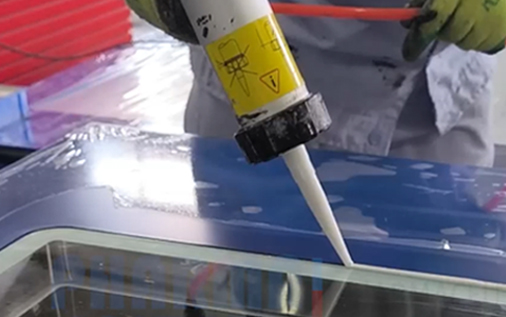
| Black spots at joints | Humidity and mold in sealant | Clean, dry, use mold-resistant sealant |
| Delay in spare parts | Customs or shipping time | Keep a spare kit on site |
After any earthquake, inspect hangers, bracing, doors and joints before the room returns to use.
Because shipping takes weeks, we suggest agreeing an emergency routine at handover: which spare parts stay on site, who orders more and how urgent parts will travel. We keep project records, so urgent orders can be identified and prepared quickly.
Replacement parts are made to the original specification, so appearance and performance match the existing system. For urgent cases, we discuss the fastest shipping option and prepare documents in advance.
Our engineers can also join a video call with your maintenance team.
Commercial Terms, Warranty and Lifecycle Cost
In Latin America, landed cost can differ greatly from the factory price because of freight, import duties, taxes and local handling. A realistic budget starts with the full landed cost and includes seismic design and installation.
| Item | Our approach |
|---|---|
| Quotation | Itemized by room and component, with scope and exclusions listed |
| Trade terms | FOB, CFR or CIF, defined in the quotation |
| Payment | T/T or letter of credit by agreement; commonly a deposit with balance before shipment or against documents; final terms in the contract |
| Warranty | Defined by component group in the contract |
| Lead time | Production time plus sea transit; stated in the quotation |
| Documents | Prepared for the importer and customs agent |
Where cost is decided in this region:
- Import taxes: can add a large share to the landed cost in some countries.
- Seismic design: extra bracing and anchors add cost but are essential.
- Altitude: larger HVAC capacity may be needed.
- Currency: exchange rate changes can affect the final cost.
Duties, taxes, customs fees, inland transport, registrations, permits and installation labor depend on the country and are not part of the product price unless included in the quotation. Warranty exclusions are stated clearly in the contract.
When comparing quotations, ask each supplier to state panel core, face material, edge sealing, packing for long sea routes, delivery terms and who pays which charges. A low ex-factory price can hide high landed costs.
We provide itemized quotations and are glad to explain every line.
Our staff reply promptly and in plain language, and our designers can adapt standard layouts to your building and your process.
Real Factory Strength for Latin American Buyers
Latin American buyers look for real factories with reliable shipping. Pharma United Co., Ltd., founded in 2006, runs two factories in Kunshan and Qianjiang covering 20,000 m², with more than 60 staff, and ships over 1,000 forty-foot high-cube containers a year. We are a manufacturer, not a trading company.
| Indicator | Information |
|---|---|
| Experience | 20+ years in cleanroom engineering |
| HPL cleanroom panels | About 250,000 m² per year; China's largest HPL cleanroom panel manufacturer |
| Container shipments | More than 1,000 forty-foot high-cube containers per year |
| Location | Kunshan, about 30 km from Shanghai |
| Product range | Panels, doors and windows, equipment, modular PODs, HEPA products |
| Service | Design, manufacture and installation support |
Why this helps Latin American buyers: our export experience helps with packing and documents for long sea routes, and our lightweight modular systems and flat-pack kits suit projects with limited local cleanroom skills. Because panels, doors, windows and equipment come from one factory, interfaces match and sourcing is simpler.
Buyers can visit the factory, join a live video tour, review production records, see sample panels and, where available, ask for references from comparable markets.
Our designers prepare layouts and detail drawings, our engineers review sealing and interface details, and our production teams run dedicated lines for panels, doors, windows and equipment. Export coordinators prepare packing and documents for shipments to many countries.
Customers return for new rooms and spare parts, and we can share photos and videos of completed rooms on request. Visitors are welcome at our factory by arrangement.
Cleanroom Supplier for Latin America FAQ
Q1. How long does shipping to Latin America take?
Sea transit is commonly four weeks or more, depending on the port, plus customs and inland transport.
Q2. Do I need a local importer?
Usually yes. A local importer or agent handles registration, duties, taxes and customs clearance.
Q3. Does altitude affect a cleanroom?
Yes. Thinner air reduces fan capacity and changes filter and sensor behavior, so HVAC sizing must allow for it.
Q4. Are lightweight panels good in earthquake zones?
Their low weight helps, but ceilings, walls and equipment must still be anchored and braced to local seismic codes, designed by a local engineer.
Q5. Do you have Spanish documents?
Our website has a Spanish version, and Spanish drawings, labels or manuals can be discussed. Portuguese can be arranged for Brazil.
Q6. Can you support FDA-oriented plants in Mexico?
We supply the envelope and equipment and provide records that support qualification. Your quality unit and regulators decide the requirements.
Q7. How do I get a quotation?
Send your project type, floor plan, classes, location and target date.
Q8. Can you work with my local contractor?
Yes. We provide drawings, a manual and remote support, and can send an engineer for critical stages.
Q9. Do you offer samples?
Yes, samples can be sent for approval.
Our staff reply promptly and in plain language, and our designers can adapt standard layouts to your building and your process.
We are glad to explain every line of our quotation and to prepare alternative options if you need to adjust the budget.