

 English
 русский
 Français
 Español
 عربى
Technical Parameters for Antibacterial Surface Options
An antibacterial surface is usually tested under ISO 22196 (similar to JIS Z 2801), which measures how much a surface reduces bacteria such as E. coli and S. aureus after a set contact time. A reduction of more than 99 %, sometimes expressed as an R value of 2 or more, is a common target. Your regulator, hospital or customer decides which claim and which test is needed.
| Surface option | Key hygiene features | Typical use |
|---|---|---|
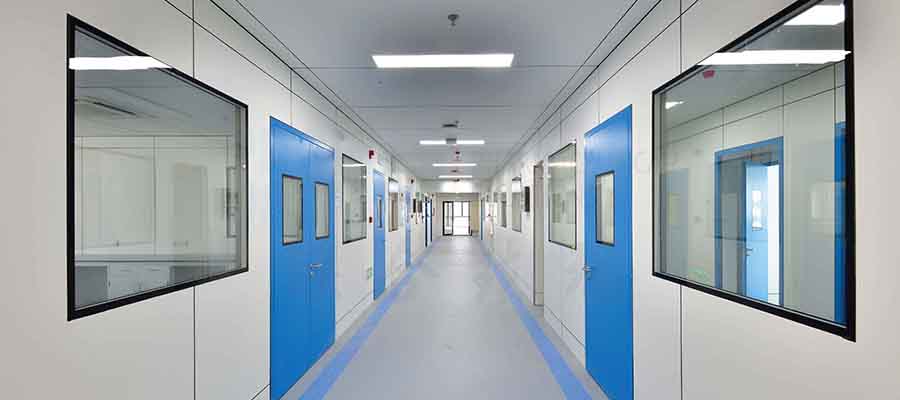
| HPL (high-pressure laminate) | Dense, non-porous melamine face; antibacterial additive can be requested | Pharma, hospitals, laboratories |
| PCGI (pre-coated steel) | Smooth coated face; antibacterial coatings may be available | General cleanrooms, corridors, food areas |
| Stainless steel (304, 316L) | Non-porous metal, high chemical and wash resistance; not antibacterial by itself | Washdown rooms, aseptic areas |
| Powder-coated steel | Seamless coating, color options | Dry areas, offices, warehouses |
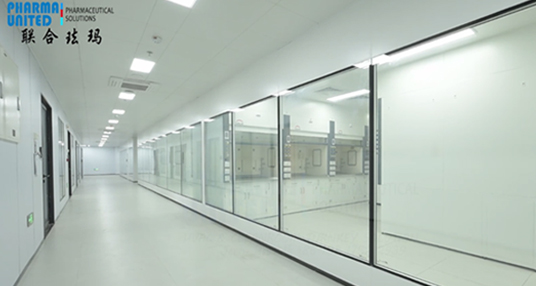
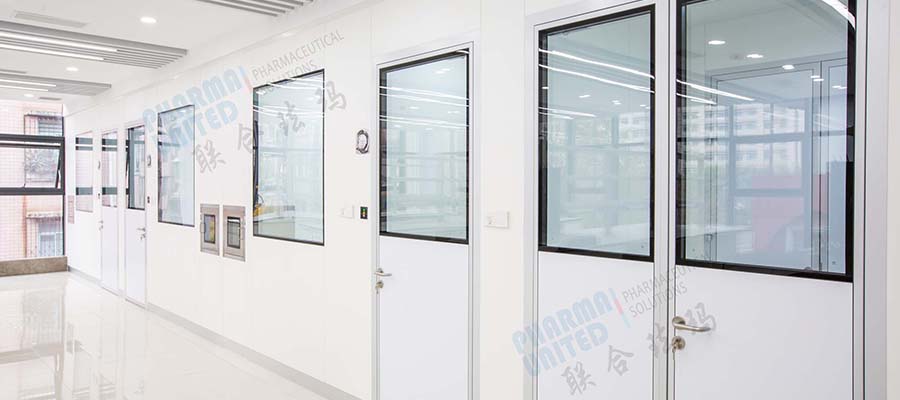
| Flush door and window frames | Few ledges, sealed glass | All classified areas |
What really controls surface hygiene:
- Smoothness: fewer scratches and pores leave fewer places for residue and microorganisms.
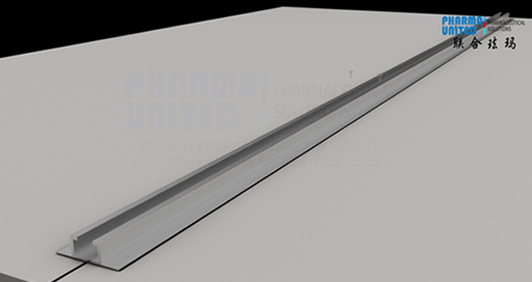
- Joints and corners: flush joints, coved corners and sealed edges matter as much as the face itself.
- Cleaning routine: regular cleaning and disinfectant rotation is the main control in all standards.
- Chemical compatibility: a surface that is damaged by disinfectants loses its hygiene benefit.
We can discuss colors, sizes and thicknesses for each room.
Occupancy and traffic: high-touch areas, such as door leaves, handles, wall zones near sinks and trolley routes, benefit most from durable, non-porous faces. Ceilings, which are rarely touched, usually need only smooth, sealed panels.
Cross-Border Delivery and Localized Construction Support
When customers order antibacterial surfaces for overseas projects, the main questions are about documents, samples and handling. We prepare the shipment so that the surface arrives undamaged and the paperwork matches the product.
- Samples first: we can send small samples of HPL, coated or stainless faces so your team can test cleaning agents and approve the finish.
- Protective film: panel faces are covered with film during production and shipping, to avoid scratches that would spoil the surface.
- Careful packing: panels are packed flat with corner and edge protection, and labeled by room.
- Documents: packing list, commercial invoice and certificate of origin, with FOB, CFR or CIF terms.
- Test report matching: where an antibacterial test report exists, we make sure it refers to the exact material supplied.
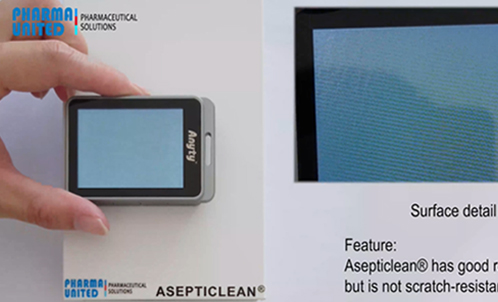
Local installation: a trained local contractor can install the panels, with our drawings and sealing guidance. Keep the protective film on until the final cleaning stage, and avoid dragging tools or trolleys across finished faces. Scratches can cut through the surface layer and create places where dirt collects.
In some countries, antibacterial additives fall under biocide or treated-article rules, which can limit what may be claimed on a product or in marketing. Your importer or regulatory adviser should check the local requirements, and we will supply the material information they need.
For large projects, we suggest approving one finished sample wall, with joints, corners and a door frame, before mass production. This sample shows how the surface, edges and sealant look together, and it gives your hygiene team a chance to test cleaners on the real system.
Quality Control and Certification
Buyers often ask for an "antibacterial certificate". It is more accurate to speak of a test report for a defined material, a defined organism and a defined method. We do not describe a surface as antibacterial unless a report supports it, and we never describe a panel as sterile or as removing the need for disinfection.
| Control step | Inspection | Why it matters |
|---|---|---|
| Incoming materials | Face sheet, laminate, coating, core, profiles | Known quality |
| Face inspection | Scratches, bubbles, color uniformity, film condition | Smooth, cleanable surface |
| Panel production | Dimensions, flatness, bonding, edge sealing | Tight, sealed joints |
| Surface option check | Match of face type to order and any test report | Correct product shipped |
| Door and window | Gasket contact, frame flushness | Fewer dirt traps |
| Packing | Count, labels, film protection | Undamaged delivery |
Documents available: material specifications, factory inspection records and, where available, antibacterial or surface test reports for the specified face. Please tell us the test method you require, for example ISO 22196, so we can check whether a matching report exists.
For hospital or pharmaceutical projects, we welcome factory audits, sample approval and questionnaires from your quality or infection control team. We would rather confirm limits clearly than promise a claim that cannot be supported.
Infection control teams, quality managers and consultants often ask for evidence before approving a surface. We provide material data, samples and available test reports, and we explain how the face is made, pressed and inspected. Our factory can host audits or live video tours, so reviewers can see the process themselves.
Batch records are kept for each project, so later questions on a specific room can be traced to production.
After-Sales Service and Response Capability
The hygiene value of a surface depends on its condition over time. Scratches, chipped edges and worn gaskets all reduce it. Our after-sales service aims to repair damage early and supply matching parts, using the drawings and records stored for each project.
- Fast communication: technical questions answered in English by email, phone or messaging.
- Remote diagnosis: photos or videos of damaged faces, joints and gaskets help us advise on repair.
- Spare panels and parts: panels, door leaves, gaskets, hinges, windows and protective rails.
- Cleaning advice: guidance on agents and methods that protect the surface.
- Engineer visits: by arrangement.
Typical surface problems:
| Observation | Possible cause | Suggested action |
|---|---|---|
| Scratches or chips | Trolley impact, tools | Repair or replace panel; add protective rails |
| Dull or stained surface | Unsuitable cleaner, residue build-up | Review cleaner and rinse routine |
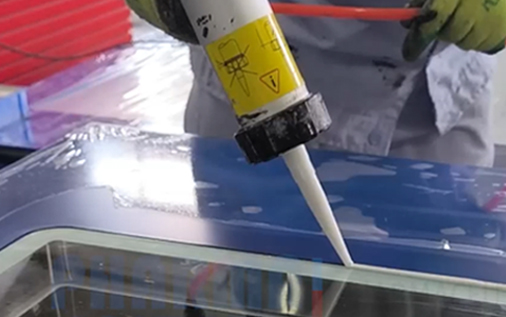
| Open joint or corner | Sealant aging, movement | Re-seal with suitable material |
Please remember that antibacterial additives do not remove the need for routine cleaning. A damaged or dirty surface can still harbor microorganisms, so early repair is an important part of any hygiene program.
For hospitals and laboratories, we suggest a simple surface inspection schedule: a weekly visual check by cleaning staff and a monthly check by maintenance. Staff should look for scratches, chipped corners, lifted edges, stained patches and worn gaskets, and photograph anything unusual. Sending these photos with the room name lets our engineers compare them with the project drawings.
Replacement panels and parts are made to the original specification, so color and sealing match the existing system. For urgent cases, we discuss the fastest shipping option and prepare documents in advance.
A small stock of gaskets and sealant at the site helps you act the same day.
Commercial Terms, Warranty and Lifecycle Cost
Antibacterial and easy-clean surfaces cost more than basic painted faces. The question is whether the extra cost reduces cleaning time, repair work and infection or contamination risk in your setting. In hospitals, laboratories and food plants, the answer is often yes, but not in every room.
| Item | Our approach |
|---|---|
| Quotation | Itemized by room and surface type, with drawings |
| Trade terms | FOB, CFR or CIF, defined in the quotation |
| Payment | Commonly a deposit with balance before shipment or against documents; final terms in the contract |
| Warranty | Defined by component group in the contract |
| Lead time | Given after drawing confirmation |
| Customization | Face type, thickness, color, sizes |
Where to spend and where to save:
- Spend on durable, non-porous faces in high-touch and high-risk rooms, such as theatres, aseptic areas and washdown rooms.
- Balance cost and durability in corridors and general processing rooms.
- Save in storage, offices and low-risk areas with standard coated faces.
- Protect walls with rails at trolley height to keep the surface intact.
Cleaning agents, monitoring programs, HVAC and permits are outside our supply. Warranty exclusions, such as damage from unsuitable chemicals, are stated clearly in the contract.
When comparing quotations, make sure each supplier states the face type, any antibacterial additive, thickness, edge sealing, door finish and packing. Some offers use the word antibacterial without test data, so it helps to ask for the report and the method.
We provide itemized quotations and can show alternatives, for example antibacterial faces for patient and sterile areas and standard faces for storage, so your budget is used where hygiene matters most.
Real Factory Strength for Surface-Critical Projects
Surface quality depends on materials, pressing and inspection, so it is worth knowing who makes the product. Pharma United Co., Ltd., founded in 2006, runs two factories in Kunshan and Qianjiang covering 20,000 m², with more than 60 staff. We are a manufacturer, not a trading company.
| Indicator | Information |
|---|---|
| Experience | 20+ years in cleanroom engineering |
| HPL cleanroom panels | About 250,000 m² per year; China's largest HPL cleanroom panel manufacturer |
| Container shipments | More than 1,000 forty-foot high-cube containers per year |
| Location | Kunshan, about 30 km from Shanghai |
| Product range | Panels, doors and windows, equipment, modular PODs, HEPA products |
| Service | Design, manufacture and installation support |
Why this helps buyers of hygienic surfaces: as a large HPL cleanroom panel producer, we keep faces, cores and edges under our own control, and we apply the same inspection to every batch. Because panels, doors and windows come from one source, finishes match and joints are cleaner.
Samples, references, factory visits and video tours are available on request. Our engineers answer technical questions directly, so decisions are not delayed.
Our designers prepare layouts and drawings, our engineers review sealing and interface details, and our production teams run dedicated lines for panels, doors and equipment. Export coordinators prepare packing and documents for shipments to many countries.
Hospital and laboratory customers return for new rooms and spare parts, and we can share photos and videos of completed projects on request. Visitors are welcome at our factory by arrangement.
Our staff reply promptly and in plain language, and our designers can adapt standard layouts to your building.
Antibacterial Cleanroom Surfaces FAQ
Q1. Does an antibacterial surface make a room sterile?
No. It can reduce bacterial growth on the surface under test conditions, but cleaning and disinfection remain essential.
Q2. Which test method is used?
ISO 22196 and similar methods measure the reduction of bacteria on a surface after contact. Please tell us the method your project requires.
Q3. Is HPL antibacterial?
Standard HPL is non-porous and easy to clean. Antibacterial versions use an added agent, and availability and test data depend on the product.
Q4. Is stainless steel antibacterial?
Stainless steel is non-porous and easy to clean, but it is not antibacterial by itself. It is chosen for durability and chemical resistance.
Q5. Will disinfectants damage the additive?
Harsh agents and abrasive cleaning can wear surfaces. Send us your cleaning list, and we will advise on suitable faces.
Q6. Can I make claims in my own marketing?
Rules differ by country. Please check local biocide and advertising rules before making claims, and use only wording supported by test reports.
Q7. How do I request samples or a quotation?
Send your application, floor plan, cleaning agents and destination country.
Q8. Can I add antibacterial surfaces to an existing room?
Panels can be replaced in sections, or new rooms can be added. Please check compatibility with the existing system.
Q9. Do antibacterial surfaces last forever?
Performance depends on the product and on wear. Surface damage and harsh cleaning can reduce it.
Q10. Can you send samples?
Yes, samples can be sent for your own cleaning tests.