

 English
 русский
 Français
 Español
 عربى
Technical Parameters for Cosmetics Cleanrooms
ISO 22716 does not prescribe a fixed cleanroom class. The class is set by product risk, such as eye-area, baby and leave-on products, and by local rules or customer requirements. Many plants use ISO 8 for filling and packing, with tighter control for sensitive products. The table gives common references.
| Area | Typical reference | Typical materials from us |
|---|---|---|
| Emulsifying and mixing | Hygienic, washable room, often ISO 8 or controlled non-classified | PCGI or HPL panels, flush doors |
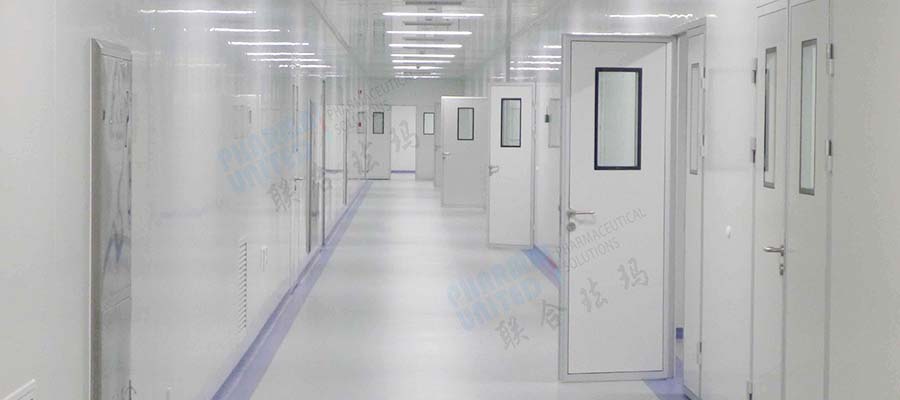
| Filling and capping (creams, lotions) | ISO 8, local ISO 7 for sensitive products | Panels, HEPA Supply Boxes, Laminar Air Flow |
| Eye-area and baby products | ISO 7 or ISO 8, stricter microbial control | Flush panels, Air Shower, interlocks |
| Powder dispensing and pressing | Dust extraction, negative pressure to corridors | Weighing Booth, panels |
| Packaging | Clean, dry, controlled access | Panels, windows, Pass Box |
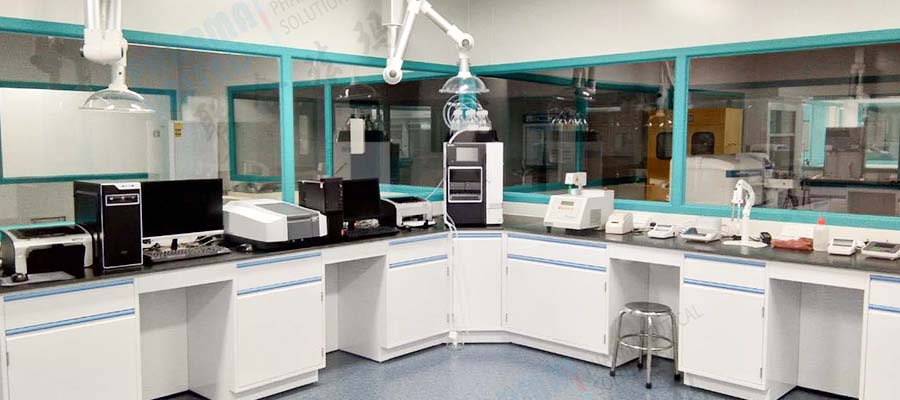
| QC microbiology laboratory | ISO 7 or ISO 8 with biosafety cabinet | Panels, doors, windows |
Design points:
- Microbial limits: ISO 17516 gives typical limits, for example lower limits for eye-area and baby products than for other products.
- Temperature and humidity: commonly about 18–26 °C and 45–65 % RH, set by your products and powders.
- Surface resistance: alcohol, essential oils and solvents can damage weak finishes, so face material matters.
- Flammables: aerosols, nail polish and perfume use flammable materials, and explosion protection is a specialist design.
We customize panel size, color and door options for each plant.
Layout reminder: keep raw materials, bulk, filling, packaging and finished goods on separate routes, and place airlocks between areas of different risk. Powder rooms should be segregated and extracted to avoid cross-contamination of creams and liquids.
Cross-Border Delivery and Localized Construction Support
Cosmetics factories often need to start production for new product launches or new markets, so schedule matters. We plan shipments around your equipment installation and your registration or audit dates, and we keep the schedule clear for everyone involved.
- Process review: we study your flow of raw materials, bulk, filling and packaging.
- Drawings: layout, elevations, door schedules and ceiling plans are confirmed before production.
- Flat-pack shipping: panels and profiles are packed flat, and mixed loads reduce freight cost.
- Documents: packing list, commercial invoice and certificate of origin, with FOB, CFR or CIF terms.
- Installation support: manuals, video guidance or a supervising engineer.
Local construction: a trained local contractor can install cosmetics cleanrooms quickly. Key coordination points include floor drainage, tank and mixer access, steam and water pipes, compressed air and electrical openings. These should be agreed before the walls are closed and sealed carefully afterward.
For plants making aerosols or alcohol-based products, local fire and explosion rules apply, and a specialist must design hazardous areas. Your engineer remains responsible for approvals, and we provide drawings and technical information.
Brand owners often visit or audit new contract plants before approving production. We therefore suggest agreeing the room layout, finishes and documentation with your customer early, and we can provide drawings, photos and material information for their review.
Staged shipments can also be arranged when the building is handed over in phases, which prevents panels from waiting too long in storage.
Our staff reply promptly and in plain language.
Quality Control and Certification
Cosmetics plants are audited under ISO 22716, retailer standards and national rules. Building products are not "ISO 22716 certified", and no panel carries a cosmetics GMP approval, so we do not claim this. We provide consistent products and clear records.
| Control step | Inspection | Why it matters |
|---|---|---|
| Incoming materials | Sheet, face, core, profiles, gaskets, glass | Known quality |
| Panel production | Dimensions, flatness, bonding, edge sealing | Tight, flush joints |
| Surface inspection | Scratches, bubbles, color, cleanability | Easy cleaning |
| Chemical suitability | Review of your cleaners, alcohols and solvents | Surface durability |
| Door and equipment | Function test of doors, booth and Pass Box | Ready for installation |
| Packing | Count, labels, condition | Complete delivery |
Documents available: material specifications, factory inspection records, filter data and, where available, reports on fire or surface performance.
Brand owners often audit contract manufacturers on cleanliness, pest control, air quality and records. Please share your cleaning agents and room classes, and we will advise on suitable faces and sealants. Sample approvals and factory audits are welcome.
Brand owners and retailers frequently send detailed supplier questionnaires and may ask about materials, cleaning resistance and records. We answer these openly, supply sample panels, joints and gaskets for your own tests, and welcome factory visits or live video tours. Batch records are kept for each project, which allows later questions to be traced to production.
If your market requires a certain declaration or test report, please tell us at the start. We will confirm what exists and say plainly if it does not, so that your documentation stays accurate.
After-Sales Service and Response Capability
Cosmetics lines run according to product launches and seasonal demand, so downtime is costly. We maintain project records, so we can supply matching parts and extensions long after installation.
- Fast communication: technical questions answered in English by email, phone or messaging.
- Remote diagnosis: photos or videos of damaged panels, gaskets or windows help us assess problems.
- Spare parts: gaskets, hinges, handles, door leaves, windows, lights and HEPA Filters.
- Line changes: doors can be widened, openings added or rooms extended as product ranges grow.
- Engineer visits: by arrangement.
Typical wear points in cosmetics plants:
| Location | Typical issue | Suggested action |
|---|---|---|
| Wall bases and door edges | Trolley and tank impact | Fit protective rails, repair panel |
| Panel faces near mixers | Splash of alcohol or oils | Review cleaner, repair or replace face |
| Door gaskets | Compression wear | Replace gasket |
| Joints and corners | Sealant aging | Re-seal |
Please send a photo, the room name and a short description of any problem, and we will recommend a practical fix.
For cosmetics plants, the first signs of trouble are often small, such as softened sealant near mixers, discoloration from oils or alcohol, or a door that no longer closes flush. We encourage staff to photograph such areas during routine cleaning and send them to us with the room name.
With the stored drawings and project records, our engineers can identify the original panel or door type, suggest the likely cause and prepare matching parts. Replacement items are made to the original specification, so appearance and sealing remain consistent.
A small stock of gaskets, sealant and door hardware at the plant helps you react quickly. We can also join a video call with your maintenance team.
Commercial Terms, Warranty and Lifecycle Cost
Cosmetics brands often operate with many products and frequent launches, so a flexible and modular envelope can save more than a lower initial price. Rooms can be re-planned when product mix changes, without rebuilding walls.
| Item | Our approach |
|---|---|
| Quotation | Itemized by area and component group, with drawings |
| Trade terms | FOB, CFR or CIF, defined in the quotation |
| Payment | Commonly a deposit with balance before shipment or against documents; final terms in the contract |
| Warranty | Defined by component group in the contract |
| Lead time | Given after drawing confirmation |
| Customization | Size, thickness, color, door layout, window options |
Ways to control long-term cost:
- Class by product risk: use higher classes for sensitive products and standard rooms elsewhere.
- Durable faces: HPL and stainless suit alcohol, oils and frequent cleaning.
- Airtightness: reduces HVAC energy and keeps humidity steady.
- Modularity: allows lines to be added or moved.
Process equipment, water systems, HVAC, explosion protection, monitoring and permits are outside our supply. Warranty exclusions are stated clearly in the contract.
When comparing quotations, make sure each supplier lists the same items: panel core, face material, thickness, profiles, door hardware, glass, ceiling panels and packing. These details explain most price gaps and affect long-term performance in rooms exposed to alcohol and oils.
We provide itemized quotations and can show alternatives, such as a higher-grade face for filling rooms and an economical face for warehouses, so your budget follows your risk. Phased pricing is also available for multi-line plants.
We are glad to explain every line of our quotation.
Real Factory Strength for Cosmetics Projects
Cosmetics manufacturers want stable suppliers and quick support. Pharma United Co., Ltd., founded in 2006, runs two factories in Kunshan and Qianjiang covering 20,000 m², with more than 60 staff. We are a manufacturer, not a trading company.
| Indicator | Information |
|---|---|
| Experience | 20+ years in cleanroom engineering |
| HPL cleanroom panels | About 250,000 m² per year; China's largest HPL cleanroom panel manufacturer |
| Container shipments | More than 1,000 forty-foot high-cube containers per year |
| Location | Kunshan, about 30 km from Shanghai |
| Product range | Panels, doors and windows, equipment, modular PODs, HEPA products |
| Service | Design, manufacture and installation support |
Why this helps cosmetics buyers: large panel output supports big plants with uniform color and finish. Because panels, doors, windows, Weighing Booths and Air Showers come from one source, the whole plant can share the same style and dimensions.
Samples, references, factory visits and video tours are available on request. Our designers can adapt layouts to match your process.
Our engineers answer technical questions directly, so decisions are not delayed.
Our designers prepare layouts and drawings, our engineers review sealing and interface details, and our production teams run dedicated lines for panels, doors and equipment. Export coordinators prepare packing and documents for shipments to many countries.
Customers in personal care and related industries return for new lines and spare parts, and we can share photos and videos of completed rooms on request. Visitors are welcome at our factory by arrangement.
Our staff reply promptly and in plain language.
Cosmetics Manufacturing Cleanroom FAQ
Q1. Does ISO 22716 require a cleanroom?
It does not set a specific cleanroom class. It requires suitable premises, controlled processes and hygiene. Many manufacturers use ISO 8 rooms for filling and tighter control for sensitive products.
Q2. Which class suits eye-area or baby products?
Many plants choose ISO 7 or ISO 8 with strict microbial control. Your risk assessment and market rules decide.
Q3. Can your panels resist alcohol and solvents?
HPL and stainless faces perform well. Send us your agents so we can check suitability.
Q4. Do you supply powder weighing booths?
Yes. We supply Weighing Booths and Laminar Air Flow units for dispensing and sampling.
Q5. Are your panels certified for cosmetics?
No building product carries such a certificate. Our panels are smooth, sealed and cleanable, and we supply records that support your audits.
Q6. Can I make aerosols in a cleanroom?
Aerosol and solvent areas need explosion protection designed by specialists. We can supply the envelope where local rules allow.
Q7. How do I get a quotation?
Send your product types, floor plan, target market and destination country.
Q8. Can I add a new line later?
Yes. Modular panels allow new rooms and openings with limited disruption.
Q9. Do you offer samples?
Yes, samples can be sent for your own alcohol and cleaner tests.
Q10. Does MoCRA affect the cleanroom?
MoCRA brings GMP and facility registration requirements for the US market. Your regulatory team should confirm the current rules, and we can supply drawings and material information for your files.