

 English
 русский
 Français
 Español
 عربى
Technical Parameters for Vaccine Plants
Requirements depend on vaccine type, process steps and the guidance in force, such as WHO GMP for biological products, EU GMP and national rules. A facility risk assessment, including biosafety classification of the agent, determines the final design. The table shows common references.
| Area | Typical reference | Typical materials from us |
|---|---|---|
| Aseptic fill-finish | Grade A in Grade B (ISO 5 in ISO 7 in operation) | Flush panels, HEPA Supply Boxes, interlocked airlocks |
| Formulation and buffer preparation | Grade C or D | Smooth panels, flush doors |
| Upstream culture (closed systems) | Grade D or C, depending on risk | Panels, Pass Box |
| Live agent handling | Containment, often BSL-2 or BSL-3, negative pressure | Sealed envelope, interlocks, HEPA exhaust |
| Inactivated or non-live areas | Segregated from live areas | Separate airlocks and doors |
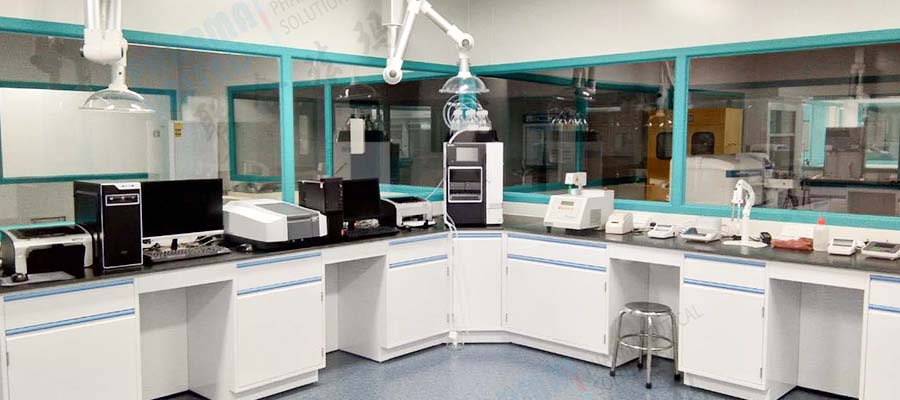
| QC microbiology laboratory | ISO 7 or ISO 8, with biosafety cabinets | Panels, doors, windows |
| Pressure cascade | About 10–15 Pa between rooms; negative in containment | Airtight envelope |
Key design points:
- Segregation: live and inactivated products, or different product types, usually need separate rooms and air handling.
- Single-pass air: rooms handling live agents often avoid recirculation, with HEPA filtered exhaust.
- Decontamination: surfaces and joints must tolerate repeated disinfection and, in some cases, gaseous methods.
- Flexibility: modular layouts support new products and capacity changes.
We customize size, thickness, colors and door layouts for each room.
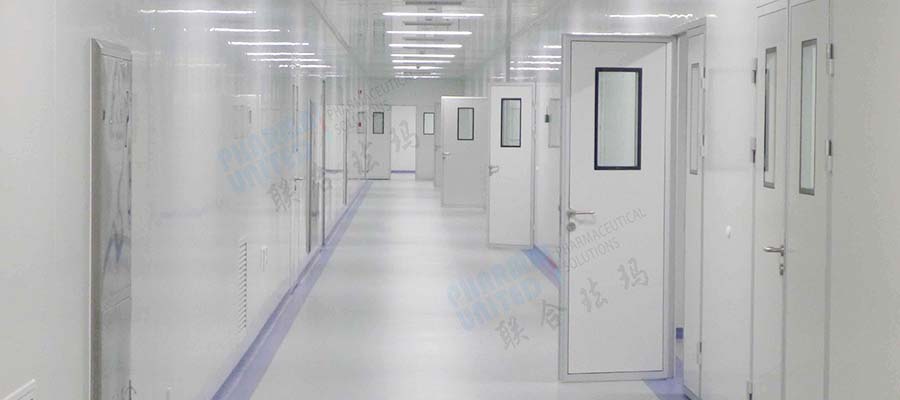
Layout reminder: keep personnel, materials, waste and finished goods on separate routes, and place airlocks between areas of different risk. We prepare layout suggestions on request, and your biosafety and process teams then adjust them.
Cross-Border Delivery and Localized Construction Support
Vaccine projects often have strong public importance and fixed deadlines, such as production start dates agreed with governments or partners. We plan shipments backward from the date when equipment must be installed and the dates for qualification, and we keep the schedule updated.
- Drawing review: room layout, grade map, airlock positions and equipment openings are confirmed before production.
- Phased shipments: fill-finish and containment rooms can be shipped first.
- Protected packing: panels, glass and filters are packed to avoid damage in sea freight.
- Documents: packing list, commercial invoice and certificate of origin, with FOB, CFR or CIF terms.
- Site support: manuals, video guidance or supervising engineer.
Local construction: a vaccine plant involves many contractors, such as civil, HVAC, piping, electrical and process equipment. Large equipment such as bioreactors and filling lines often arrives before the walls close, so we agree on equipment entry plans and temporary openings with the project team. For containment rooms, sealing of penetrations and door frames deserves special inspection.
Many countries require approval of the design and use of licensed contractors. Your project team remains responsible for permits, and we supply drawings and technical information to help.
Large vaccine projects often receive support from international agencies, which may require procurement records, packing details and transparent pricing. We can prepare itemized quotations, clear packing lists and consistent documents, and we keep a record of each shipment, so that your procurement team can answer audit questions without delay.
Staged deliveries also help when the site has limited storage space.
Quality Control and Certification
Vaccine facilities are inspected closely, often with participation from national regulators and international bodies. No wall panel or door is certified as "vaccine grade", and we avoid such claims. Our task is to provide consistent products with the records that your quality unit needs.
| Control step | Inspection | Why it matters |
|---|---|---|
| Incoming materials | Sheet, face, core, profiles, gaskets, glass | Known quality |
| Panel production | Dimensions, flatness, bonding, edge sealing | Tight joints |
| Surface inspection | Scratches, bubbles, color, cleanability | Easy decontamination |
| Door and window | Gasket contact, hardware, interlock function | Reliable sealing |
| HEPA products | Factory efficiency records, visual check | Filter traceability |
| Packing | Count, labels, condition | Complete delivery |
Documents available: material specifications, factory inspection records, filter data and, where available, reports on fire or surface performance. They can be included in your qualification files.
Because vaccine plants often use strong disinfectants and sometimes gaseous decontamination, please share your agents and methods early. We will compare them with the material data and send samples for your own testing if needed. We welcome supplier audits, and we can answer questionnaires from your quality unit and from partner organizations.
On-site testing, such as particle counts, pressure checks and filter leak tests, should be performed by a qualified third party.
Many vaccine buyers apply supplier qualification procedures that include questionnaires, document review and sometimes site audits. We take part openly, explain our production steps, and share batch records and samples. If your auditors want to see panel pressing, door assembly and packing, we can arrange a factory visit or a live video tour.
We recommend agreeing on the document list at the start of the project, so nothing is missing at handover.
After-Sales Service and Response Capability
A vaccine plant often runs on a strict production calendar, and unplanned stoppages can affect supply to patients. We therefore support customers with quick responses and exact replacement parts, backed by complete project records.
- Responsive support: technical questions answered in English by email, phone or messaging.
- Remote diagnosis: photos and videos of damaged joints, gaskets or windows help us assess problems quickly.
- Spare parts: gaskets, hinges, closers, handles, windows, lights and HEPA Filters.
- Expansion: additional rooms, airlocks or Pass Boxes can be added with updated drawings for change control.
- Engineer visits: by arrangement for repair or extension work.
Typical issues and responses:
| Observation | Possible cause | Suggested action |
|---|---|---|
| Pressure differential falls | Gasket wear, unsealed penetration, loaded filter | Replace gasket, reseal, check filter |
| Door not closing flush | Hinge settling, frame movement | Adjust hinge, check frame |
| Surface damage after decontamination | Incompatible agent or concentration | Review agent, repair or replace panel |
In containment areas, any repair should begin with the decontamination procedure required by your biosafety officer. Our engineers can join a video call to plan the work with your team.
After handover, vaccine plants usually run a planned maintenance program, and we are glad to help with the cleanroom envelope part. A yearly review of photos and inspection logs, combined with our stored drawings, helps identify parts that may need attention before they fail.
When a part has to be replaced in a containment area, send us the room number and a photo, and we will identify the item and prepare it with clear instructions. Spare gaskets, sealant and filters are inexpensive compared with lost production time, so a modest on-site stock is a sensible precaution.
We can also join video calls with your maintenance and biosafety teams to plan the repair.
Commercial Terms, Warranty and Lifecycle Cost
Vaccine plants represent very large investments, so even small improvements in the building envelope can have significant long-term value. An airtight, durable and easily decontaminated envelope reduces HVAC energy, shortens cleaning time and lowers the risk of unplanned repair.
| Item | Our approach |
|---|---|
| Quotation | Itemized by room and component group, with drawings |
| Trade terms | FOB, CFR or CIF, defined in the quotation |
| Payment | Commonly a deposit with balance before shipment or against documents; final terms in the contract |
| Warranty | Defined by component group in the contract |
| Lead time | Given after drawing confirmation |
| Customization | Size, thickness, color, door layout, window options |
Cost considerations:
- Containment areas: more demanding sealing and door details raise cost but are essential for safety.
- Segregation: additional airlocks and separate air handling add budget but prevent cross-contamination.
- Modularity: allows capacity growth or new products without demolition.
- Spare parts: a recommended stock reduces downtime.
Process equipment, effluent treatment, HVAC, monitoring, qualification and permits are outside our supply. Warranty exclusions, such as damage from unsuitable decontaminants, are stated clearly in the contract.
The largest financial risks in a vaccine plant are delay and rework, so we suggest that you evaluate suppliers by reliability as well as price. A supplier that keeps drawings consistent, ships on time and answers questions promptly can save weeks of schedule, which is usually worth more than a small difference in unit cost.
We provide clear itemized quotations and are happy to explain each line and propose alternatives where a different specification would meet your needs at a lower cost.
Real Factory Strength for Vaccine Projects
Vaccine projects need partners with proven capacity and open communication. Pharma United Co., Ltd., founded in 2006, runs two factories in Kunshan and Qianjiang covering 20,000 m² and employs more than 60 staff. We are a manufacturer, not a trading company.
| Indicator | Information |
|---|---|
| Experience | 20+ years in cleanroom engineering |
| HPL cleanroom panels | About 250,000 m² per year; China's largest HPL cleanroom panel manufacturer |
| Container shipments | More than 1,000 forty-foot high-cube containers per year |
| Location | Kunshan, about 30 km from Shanghai |
| Product range | Panels, doors and windows, equipment, modular PODs, HEPA products |
| Service | Design, manufacture and installation support |
Why this helps vaccine buyers: large and stable production keeps quality consistent over many rooms, and because panels, doors, windows and equipment come from one source, interfaces match and site adjustment is minimized. Our modular PODs also help when fast capacity is needed.
We are clear about our scope: containment-specific items, process equipment and effluent systems are provided by specialists, and we coordinate with them. Factory visits, samples, references and video tours are available.
Our team replies promptly to technical questions and prepares clear drawings for every stage.
Our designers prepare layouts and drawings, our engineers review sealing details and interfaces, and our production teams run dedicated lines for panels, doors and equipment. Our export coordinators handle packing and documents for shipments to many countries.
Customers regularly return for expansions and spare parts, and we can share photos and videos of completed rooms on request. Factory visits are welcome by arrangement.
Vaccine Production Facility FAQ
Q1. What cleanroom grade is used for vaccine filling?
Aseptic filling is generally carried out in Grade A with a Grade B background, or ISO 5 in ISO 7 under FDA guidance.
Q2. Do live and inactivated vaccines need separate areas?
Generally yes. Guidance for biological products calls for segregation to prevent cross-contamination, and many plants use separate rooms, air handling and personnel flow.
Q3. Can you supply containment equipment?
We supply the envelope, doors, windows, Pass Boxes and HEPA components. Specialist containment items, such as bio-seal dampers, effluent decontamination and autoclaves, come from specialist suppliers.
Q4. Are your panels vaccine grade?
No product is certified that way. Our panels have smooth, sealed, cleanable surfaces and come with records that support your qualification.
Q5. Can modular PODs speed up capacity?
Yes, for pilot lines, clinical supply and some production steps, when the design meets your grade and containment needs.
Q6. Can a plant be expanded later?
Yes. Modular panels allow new rooms and openings with limited disruption.
Q7. How do I request a quotation?
Send your process description, room list, floor plan and destination country.
Q8. How are pressure differences managed?
Typically through a cascade of about 10–15 Pa between rooms of different grade, with negative pressure in containment rooms, controlled by the HVAC system and held by an airtight envelope.
Q9. Can existing buildings be converted?
Often yes, after checking structure, ceiling height and utilities. Modular panels are widely used in conversions.
Q10. Do you offer samples?
Yes, samples can be sent for your own disinfectant tests.