

 English
 русский
 Français
 Español
 عربى
عربى
Modular Cleanroom Doors Manufacturer | In-House Production and Delivery
Choosing a modular cleanroom doors manufacturer is one of the most consequential decisions in any controlled-environment project. Doors are opened and closed many times every day, repeatedly exposed to aggressive cleaning agents, and required to maintain a reliable seal against contamination. A door that performs poorly can compromise the entire cleanroom, regardless of how sophisticated the air handling system may be. Experienced project teams therefore look beyond the product photo and evaluate a manufacturer's production capability, material knowledge, quality control, and willingness to support installation from design to handover. This guide explains what modular cleanroom doors are, which types are available, and how to select a manufacturer able to deliver consistent quality at scale.
What Are Modular Cleanroom Doors?
Modular cleanroom doors are engineered to work within prefabricated cleanroom partitions rather than masonry or drywall construction. Instead of fitting a door to an opening on site, the entire assembly is manufactured to match the selected wall panel module, with factory-set hinges, seals, gaskets, and hardware. The result is a door leaf and frame that installs quickly, sits flush with the surrounding panel, and preserves the room's pressure differential and cleanliness classification. Common construction features include honeycomb or solid cores, powder-coated steel or HPL surfaces, flush glazing options, and adjustable sealing systems. Because every component is produced in the same factory, tolerances remain consistent and on-site adjustments are minimized.
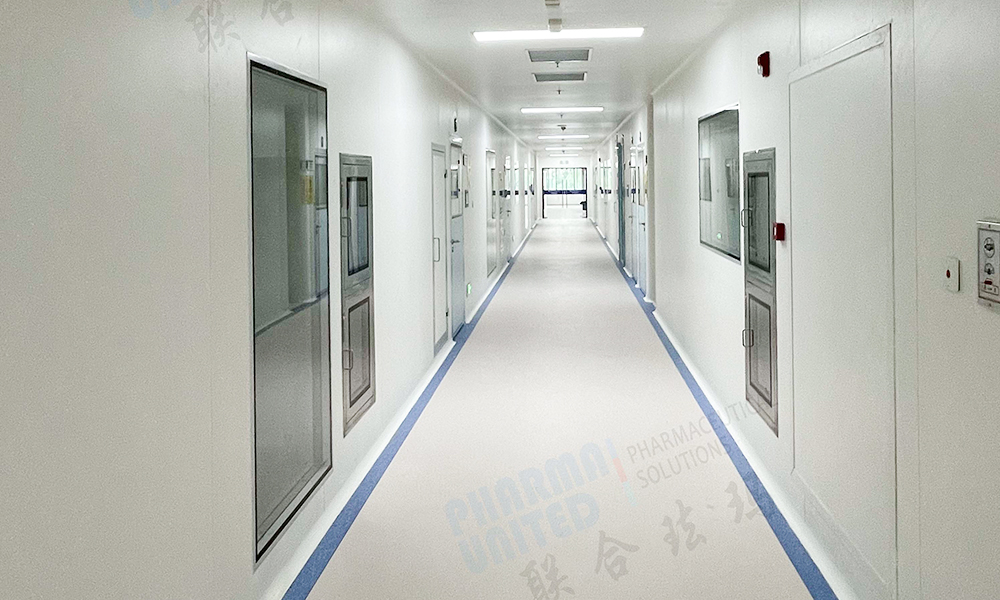 Cleanroom HPL Door for Modular PartitionsThis HPL-faced door suits modular cleanroom partitions where frequent chemical wipe-downs demand a smooth, non-porous surface. Factory-configured core, edge profile, glazing bead, and lock case allow project-specific customization while keeping installation quick and flush with panels.View Product →
An HPL cleanroom door, for example, is a common choice when the surface must resist frequent chemical wipe-downs while keeping a smooth, non-porous appearance. The door core, edge profile, glazing bead, and lock case can all be configured at the factory to match project-specific requirements, which is the essential advantage of working with a dedicated manufacturer.
Main Types of Modular Cleanroom Doors
No single door fits every cleanroom. The right configuration depends on traffic volume, room pressure, available floor space, and how materials and personnel move through the facility. A qualified modular cleanroom doors manufacturer should be able to supply several standard types without compromising quality or delivery time. Common types include:
- Swing doors: single- or double-leaf designs used in production rooms, corridors, and air locks, offering simple operation and dependable sealing.
- Sliding doors: space-saving units preferred in logistics corridors and high-traffic areas where a swing radius is not available.
- Emergency breakout doors: doors that open in the exit direction under pressure or panic conditions and remain easy to reseal afterward.
- Interlocked door sets: pairs of doors wired so that only one can open at a time, essential for air locks and changing rooms.
| Door Type | Typical Use | Key Benefit |
|---|---|---|
| Swing door | Production rooms, corridors | Simple, reliable sealing |
| Sliding door | Logistics corridors, tight spaces | Saves floor space |
| Emergency door | Exit routes, safety zones | Rapid egress |
| Interlocked doors | Air locks, changing rooms | Prevents cross-contamination |
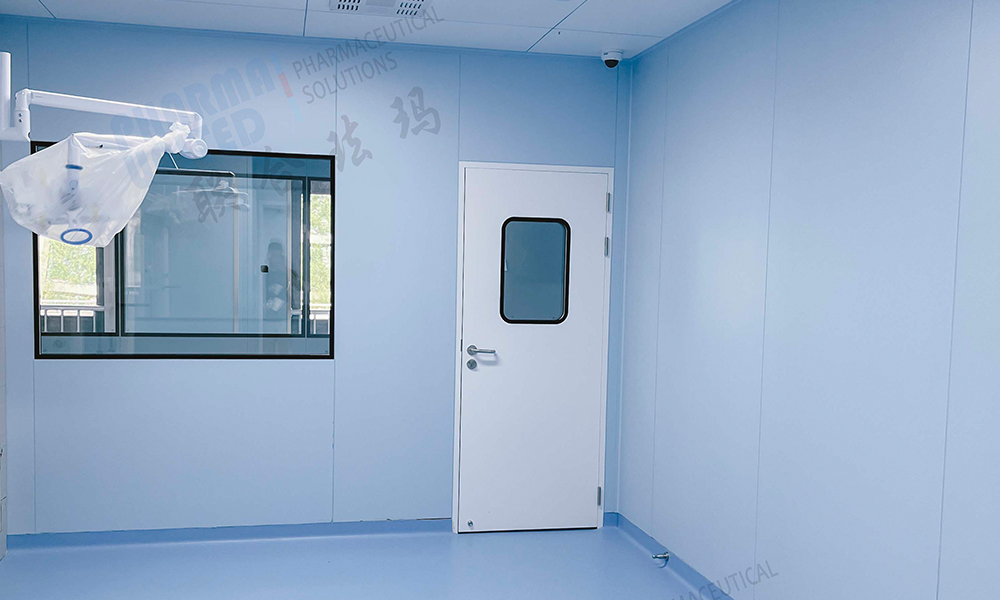 Space-Saving Cleanroom Sliding DoorThe sliding door configuration reduces required opening space, easing congestion in areas with heavy personnel or material flow. It can include automatic opening, vision windows, sealing strips, and access control—factors worth reviewing early since they affect wall reinforcement and electrical prep.View Product →
When a project calls for automated material movement or generous equipment access, a sliding cleanroom door can reduce congestion and simplify workflow. The choice between swing and sliding configurations should be made early in the design phase, because it affects wall reinforcement, hardware prep, and the electrical interface.
Material and Surface Finish Options
The surface finish of a modular cleanroom door is not purely cosmetic. It dictates which cleaning chemicals the door can tolerate, how many particles it sheds, and how long it will last in a demanding environment. HPL, or high-pressure laminate, is widely used in pharmaceutical and hospital projects because it provides a hard, smooth, chemical-resistant surface in many colors. Stainless steel is favored in aseptic processing and food facilities, where impact resistance and sanitization with strong disinfectants are mandatory. Powder-coated steel offers a cost-effective alternative for less aggressive areas. Equally important are edges, glazing profiles, hinges, and gaskets, because these details are where contamination tends to accumulate. A manufacturer that produces both doors and wall panels can match finishes across the complete enclosure, eliminating the mismatches common when components come from different suppliers.
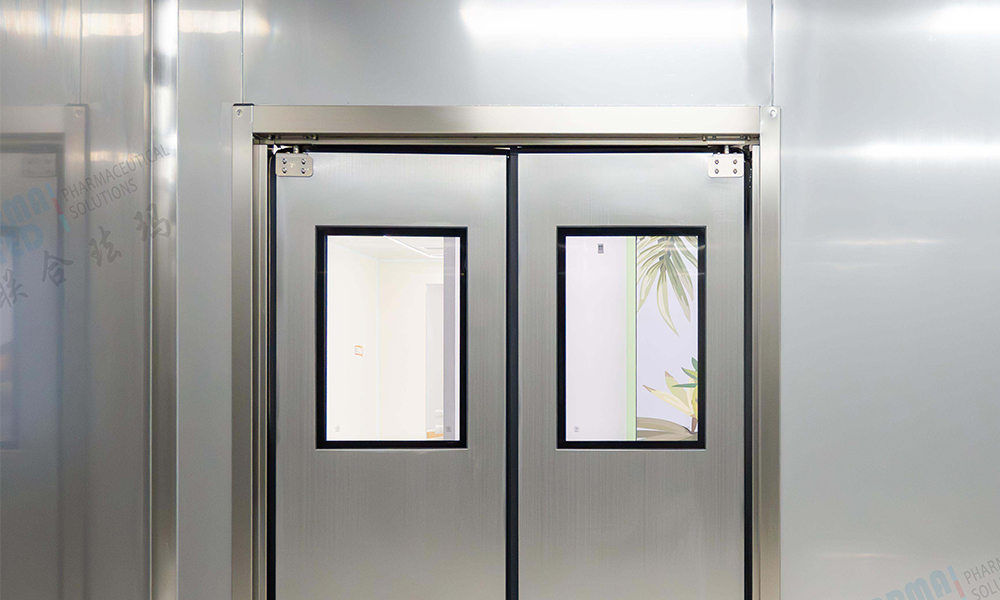 Stainless Steel Cleanroom Door for Washdown AreasMade entirely of stainless steel sheet, this door offers excellent corrosion, impact, and moisture resistance, plus easy cleaning—ideal for aseptic and food facilities that rely on strong disinfectants. Its smooth structure supports long-term durability in demanding washdown environments.View Product →
In washdown environments where moisture, heat, and strong detergents are routine, a stainless steel cleanroom door offers the longest service life and the most straightforward surface to validate.
What to Look for in a Modular Cleanroom Doors Manufacturer
Evaluating a supplier is about more than comparing prices. The following criteria help project owners, general contractors, and engineering firms separate specialized production partners from general fabricators:
- In-house manufacturing. Confirm that doors, frames, and wall panels are produced under one roof, which guarantees dimensional consistency and shorter lead times.
- Relevant experience. A manufacturer with more than a decade of controlled-environment experience has already solved the edge cases that only appear in real projects.
- Complete product range. A full portfolio that includes HPL, stainless steel, coated steel, sliding, emergency, and interlocked doors simplifies hardware standardization and maintenance.
- Stable delivery capacity. Modular projects run on tight schedules, so in-house production capacity directly protects the construction plan.
- Engineering support. The manufacturer should assist with door schedules, hardware selection, panel coordination, and installation guidance.
As an integrated supplier with factories in Kunshan and Qianjiang, our company has worked on controlled-environment projects since 2006 and produces the complete range of cleanroom doors, panels, and equipment in-house. This is why we position ourselves as a provider of turnkey cleanroom solutions rather than a single-component vendor.
Applications Across Regulated Industries
Modular cleanroom doors serve a wide range of controlled environments. In pharmaceutical manufacturing, they separate high-grade filling areas from less critical spaces and must open and close without causing air turbulence. In healthcare and hospital laboratories, doors support the room pressure cascade and require smooth, easy-to-clean surfaces that withstand constant disinfection. In food processing, stainless steel and high-stability constructions tolerate washdown cycles and temperature variation. In semiconductor and electronics fabrication, low particle shedding and reliable sealing against pressure differentials are the top priorities. A modular cleanroom doors manufacturer that serves several industries accumulates useful cross-sector knowledge that can be applied to your specific regulatory environment and process requirements.
Selecting a Partner for the Long Term
The choice of a modular cleanroom doors manufacturer affects project cost, schedule, validation, and the long-term reliability of the facility. A supplier with in-house production, a broad door range, and proven experience across pharma, healthcare, food, and electronics reduces coordination risk and becomes a genuine partner in the cleanroom system. Before you finalize your specification, ask about material certification, factory test procedures, and previous projects of a similar scale. If your project demands a turnkey approach that integrates doors, panels, equipment, and installation support, our team can assist from the first concept through to commissioning. Contact us with your door schedule and room layouts, and we will help you select the correct configurations, finishes, hardware, and interlock sequences.


-
Mobile
+86-177 1554 8238
-
E-mail
chin@pharma-united.com
-
Address
No.58 Beiyuan Road, Dianshanhu Town, Kunshan City, Jiangsu Province, China
Copyright © Pharma United Co., Ltd. Rights Reserved.
OEM/ODM Cleanroom Engineering Solution Manufacturers
