

 English
 русский
 Français
 Español
 عربى
Technical Parameters for PCR and Microbiology Laboratories
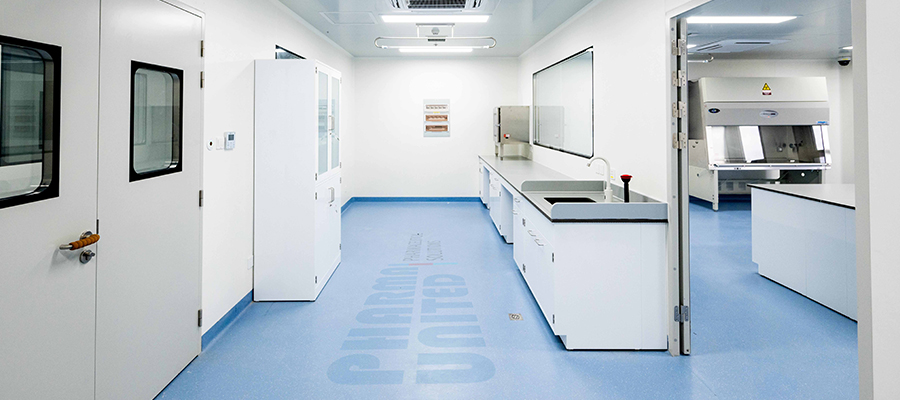
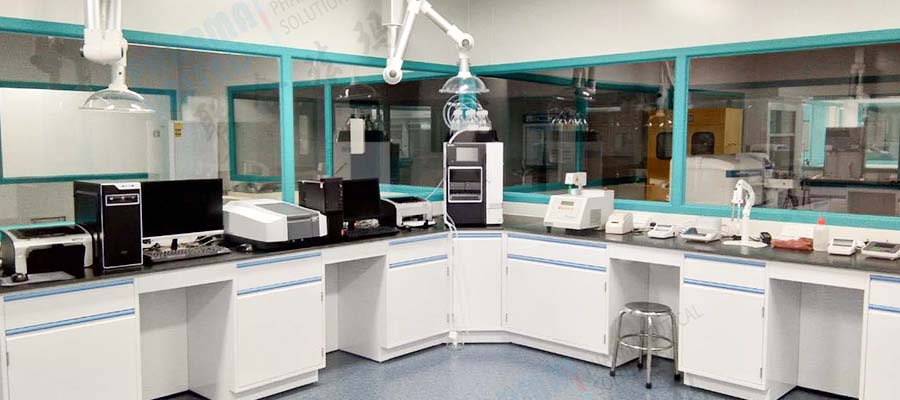
Requirements depend on the test, the sample risk and the rules that apply, such as national PCR laboratory guidelines, ISO 15189 for medical laboratories and biosafety guidance. Your laboratory director and biosafety officer set the final design. The table shows a common four-zone PCR layout.
| Zone | Purpose | Typical pressure approach | Typical materials from us |
|---|---|---|---|
| Reagent preparation | Prepare master mix, no samples or DNA | Positive to neighbors | Flush panels, HEPA Supply Box, Pass Box |
| Sample preparation | Extract nucleic acid, handle samples | Negative or neutral, with biosafety cabinet | Sealed envelope, interlocked doors |
| Amplification | Run thermal cyclers | Neutral or slightly negative | Panels, doors |
| Product analysis | Handle amplified product | Negative to neighbors | Sealed envelope, Pass Box |
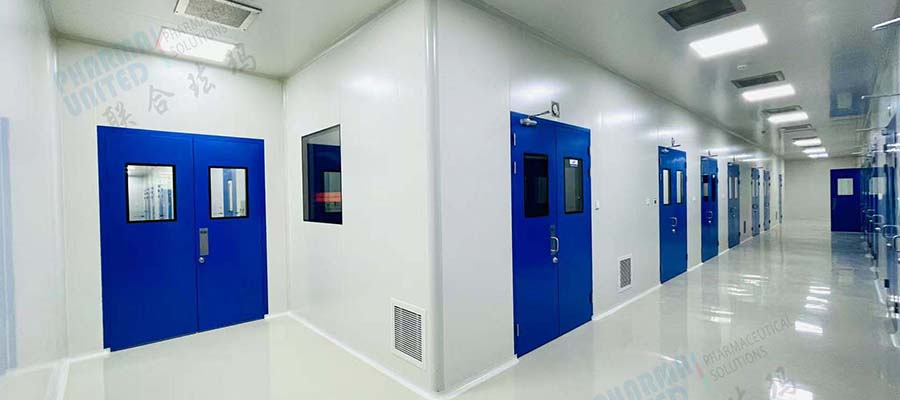
| Buffer rooms and gowning | Change gowns, enter one-way | Graded pressure | Air Shower, interlocks |
| Microbiology QC area | Culture, sterility test support | ISO 7 or ISO 8, Grade A in B for sterility tests in pharmaceutical QC | Flush panels, Laminar Air Flow |
Design points:
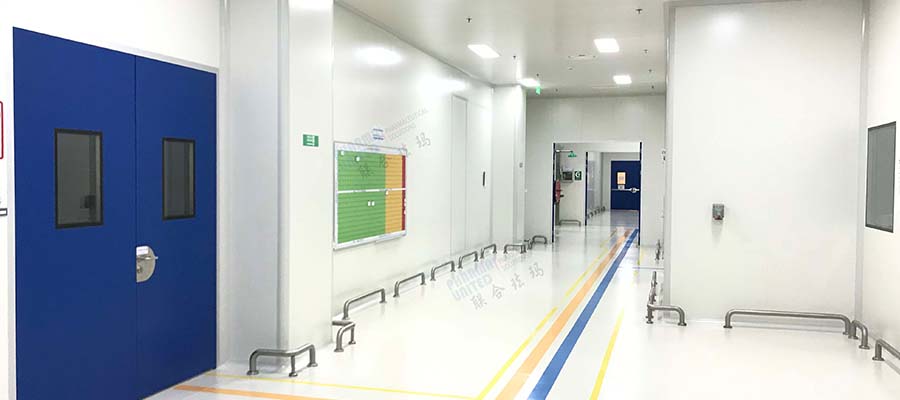
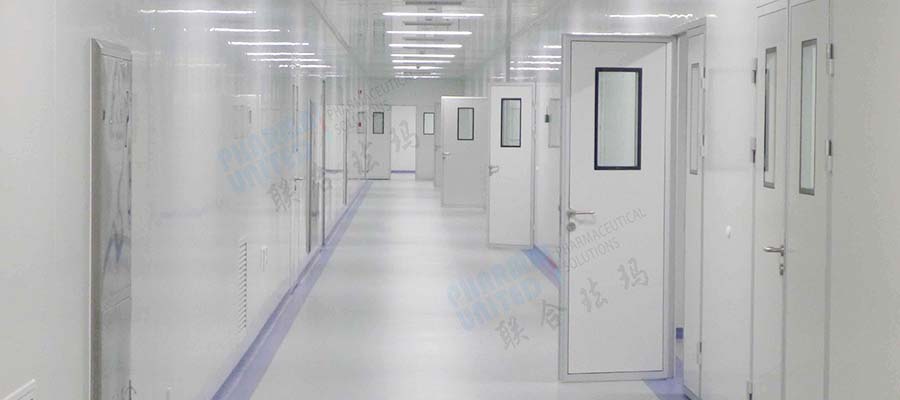
- One-way flow: samples and personnel move from clean to dirty, never back, with no shared equipment between zones.
- Cleaning: bleach and other strong agents are used to destroy DNA, so surfaces must resist them.
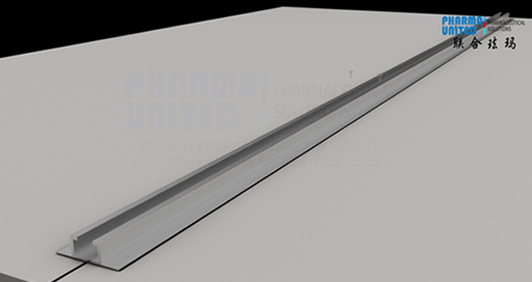
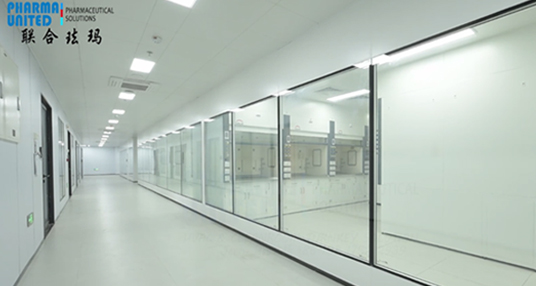
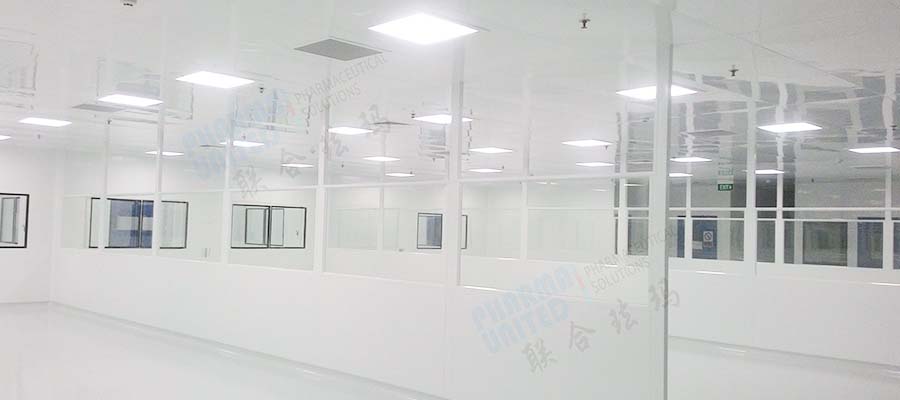
- Seamless surfaces: fewer joints mean fewer places for contamination to hide.
- Biosafety: clinical samples often require BSL-2 practices, including a Class II cabinet and controlled access.
Please also tell us the number of tests per day, the staff count and the equipment list, because these decide room sizes, cabinet positions and the number of buffer rooms.
Cross-Border Delivery and Localized Construction Support
PCR and microbiology laboratories are often urgent, for example during outbreaks, new hospital programs or public health campaigns. Modular construction is especially useful, so we focus on fast delivery, clear instructions and complete packing.
- Brief and layout: we confirm tests, zones, equipment and room sizes.
- Drawings: layout, elevations, door schedules and ceiling plans are confirmed before production.
- Production and numbering: panels, doors and profiles are produced and labeled by room.
- Packing and shipping: flat-pack or POD loading in 20GP or 40HQ containers, with documents and FOB, CFR or CIF terms.
- Installation support: manuals, video guidance or a supervising engineer.
Local construction: a trained local contractor can install a modular PCR laboratory in a short time. The points that need most care are pressure control between rooms, sealing of penetrations, door interlocks and the placement of cabinets and exhaust. Electrical, data and water points should be marked on drawings before the walls close.
Local health, building and biosafety rules apply, and your engineer or contractor remains responsible for approvals. After installation, your team should verify airflow, pressures and cabinet performance before testing begins, and accreditation bodies may ask for documented commissioning.
For urgent laboratory projects, we suggest a short planning call that includes your laboratory director, the HVAC designer, the contractor and our engineer. Reviewing room zones, door interlocks, pass boxes and utility openings on one drawing removes most doubts before production begins, and it helps the laboratory open on schedule.
Staged shipments can also be arranged when the building is handed over in phases.
Quality Control and Certification
Laboratories are accredited or approved for their quality system and their results, not for their wall panels. No panel or door is "PCR lab certified", and we do not claim this. We provide consistent products and clear records that support your commissioning and accreditation.
| Control step | Inspection | Why it matters |
|---|---|---|
| Incoming materials | Sheet, face, core, profiles, gaskets, glass | Known quality |
| Panel production | Dimensions, flatness, bonding, edge sealing | Tight joints |
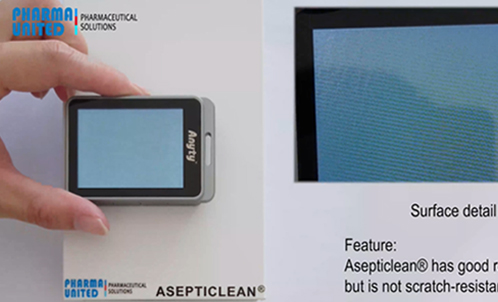
| Surface inspection | Scratches, bubbles, color, cleanability | Easy decontamination |
| Door and interlock | Gasket contact, interlock function | Reliable pressure zones |
| Equipment check | Pass Box function test | Ready for installation |
| Packing | Count, labels, condition | Complete delivery |
Documents available: material specifications, factory inspection records, filter data and, where available, reports on fire or surface performance.
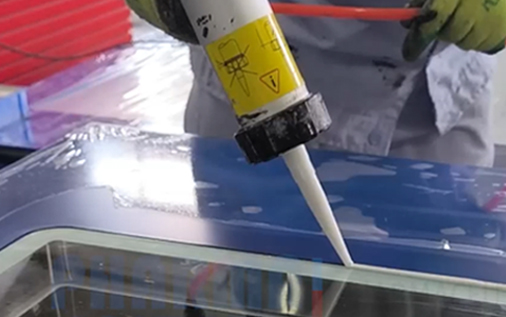
Please tell us which cleaning agents you use, such as sodium hypochlorite, ethanol or hydrogen peroxide. We will advise on compatible faces and sealants, and we can send sample panels for your own tests. Factory audits are welcome.
Accreditation bodies and health authorities usually review the whole laboratory, including layout, air pressure, cleaning procedures and records. We support this by answering technical questions, supplying sample panels, joints and gaskets for your own tests, and welcoming factory visits or live video tours. Batch records are kept for each project, so later questions about a room can be traced to production.
If your authority asks for a particular document, please tell us at the start. We will confirm what exists and say plainly if it does not, so your accreditation file remains accurate and complete.
After-Sales Service and Response Capability
Laboratories cannot afford long closures, especially when they serve hospitals and public health programs. We support customers with quick answers and matching spare parts, using the project records we keep.
- Fast communication: technical questions answered in English by email, phone or messaging.
- Remote diagnosis: photos or videos of doors, gaskets, windows and joints help us assess problems.
- Spare parts: gaskets, hinges, handles, windows, interlock parts and HEPA Filters.
- Expansion: new rooms, doors or Pass Boxes can be added as test volume grows.
- Engineer visits: by arrangement.
Typical issues:
| Observation | Possible cause | Suggested action |
|---|---|---|
| Surface discoloration | Repeated bleach exposure | Review concentration, rinse after use, repair |
| Pressure gradient lost | Gasket wear, open penetration | Replace gasket, reseal |
| Door interlock fails | Sensor or wiring fault | Check interlock, replace part |
Please keep a short maintenance log, which helps with accreditation visits. Any repair in a post-amplification area should follow your decontamination procedure.
PCR laboratories rely on strict cleaning, so wall surfaces, door edges and gaskets take a lot of wear. We suggest building a simple monthly inspection into your routine: check door closing, interlock function, gaskets, joints and corners, and photograph anything that looks changed. Sending us these photos with the room name lets our engineers compare them with the project drawings.
Replacement parts are made to the original specification, so sealing and appearance match the existing laboratory. For urgent cases, we discuss the fastest shipping option and prepare documents in advance.
A small stock of gaskets, sealant and door hardware at the laboratory helps you react quickly. Our engineers can also join video calls with your maintenance team.
Commercial Terms, Warranty and Lifecycle Cost
Laboratories often start small and grow with demand, so modular rooms are usually the most economical choice. They can be installed quickly, extended later or even relocated, which protects the investment.
| Item | Our approach |
|---|---|
| Quotation | Itemized by room and component, with drawings |
| Trade terms | FOB, CFR or CIF, defined in the quotation |
| Payment | Commonly a deposit with balance before shipment or against documents; final terms in the contract |
| Warranty | Defined by component group in the contract |
| Lead time | Given after drawing confirmation |
| Customization | Size, thickness, color, door layout, window options |
Where cost is decided:
- Number of zones: a four-zone PCR layout needs more rooms and airlocks than a simple lab.
- Pressure control: airtight envelopes lower HVAC energy.
- Surface choice: bleach-resistant faces cost more but last longer.
- Modularity: new rooms can be added without demolition.
Biosafety cabinets, PCR instruments, HVAC, furniture, monitoring and permits are outside our supply. Warranty exclusions are stated clearly in the contract.
When comparing quotations, make sure each supplier lists the same items: panel type, thickness, face material, doors, interlocks, windows, pass boxes and packing. Differences in scope explain most price gaps.
We provide itemized quotations and can show alternatives, such as a compact three-room layout for small labs and a full four-zone layout for large ones. Phased pricing allows you to order the first zones now and add the rest as test volume grows, which keeps cash flow smooth.
We are glad to explain every line of our quotation.
Real Factory Strength for Laboratory Projects
Hospitals and testing companies need suppliers who respond quickly and deliver complete shipments. Pharma United Co., Ltd., founded in 2006, runs two factories in Kunshan and Qianjiang covering 20,000 m², with more than 60 staff. We are a manufacturer, not a trading company.
| Indicator | Information |
|---|---|
| Experience | 20+ years in cleanroom engineering |
| HPL cleanroom panels | About 250,000 m² per year; China's largest HPL cleanroom panel manufacturer |
| Container shipments | More than 1,000 forty-foot high-cube containers per year |
| Location | Kunshan, about 30 km from Shanghai |
| Product range | Panels, doors and windows, equipment, modular PODs, HEPA products |
| Service | Design, manufacture and installation support |
Why this helps laboratory buyers: because we make panels, doors, Pass Boxes, equipment and PODs ourselves, a whole laboratory can come from one factory with matching dimensions and finishes. Small and medium orders are welcome, and mixed loads keep freight reasonable.
Samples, references, factory visits and video tours are available on request. Our engineers answer technical questions directly, and our designers can adapt standard layouts to your building.
Our designers prepare layouts and drawings, our engineers review sealing and interface details, and our production teams run dedicated lines for panels, doors and equipment. Export coordinators prepare packing and documents for shipments to many countries.
Laboratory customers return for new rooms, extensions and spare parts, and we can share photos and videos of completed rooms on request. Visitors are welcome at our factory by arrangement.
Our staff reply promptly and in plain language, and our designers can adapt standard layouts to your building.
PCR & Microbiology Laboratory FAQ
Q1. How many rooms does a PCR laboratory need?
A common layout has four zones: reagent preparation, sample preparation, amplification and product analysis, with buffer rooms. Smaller labs may combine some steps with strict procedures. Your guideline decides.
Q2. What pressure should PCR rooms have?
Reagent preparation is usually positive to neighbors, while sample preparation and product analysis are negative or neutral. Final values follow your guideline and HVAC design.
Q3. Are your panels PCR lab certified?
No building product carries such a certificate. Our panels are smooth, sealed and resistant to common decontamination agents.
Q4. Can you supply a mobile or modular lab?
Yes, modular PODs and panels can create fast-build or relocatable laboratories, subject to your design and local rules.
Q5. Do you supply biosafety cabinets?
No. Cabinets come from specialist manufacturers. We supply the envelope, doors, windows, Pass Boxes and HEPA components.
Q6. What about sterility testing?
Pharmaceutical sterility tests are usually done in an isolator or in Grade A within Grade B. We supply the surrounding envelope and clean air components.
Q7. How do I get a quotation?
Send your tests, zones, layout and destination country.
Q8. Can a PCR lab be built inside an existing building?
Often yes, after checking ceiling height, ventilation routes and floor loads. Modular panels cause little dust and noise.
Q9. Do you offer samples?
Yes, samples can be sent for your own bleach and cleaner tests.
Q10. Can you help with layout?
Yes, we prepare one-way flow layouts that your laboratory director can adjust.